


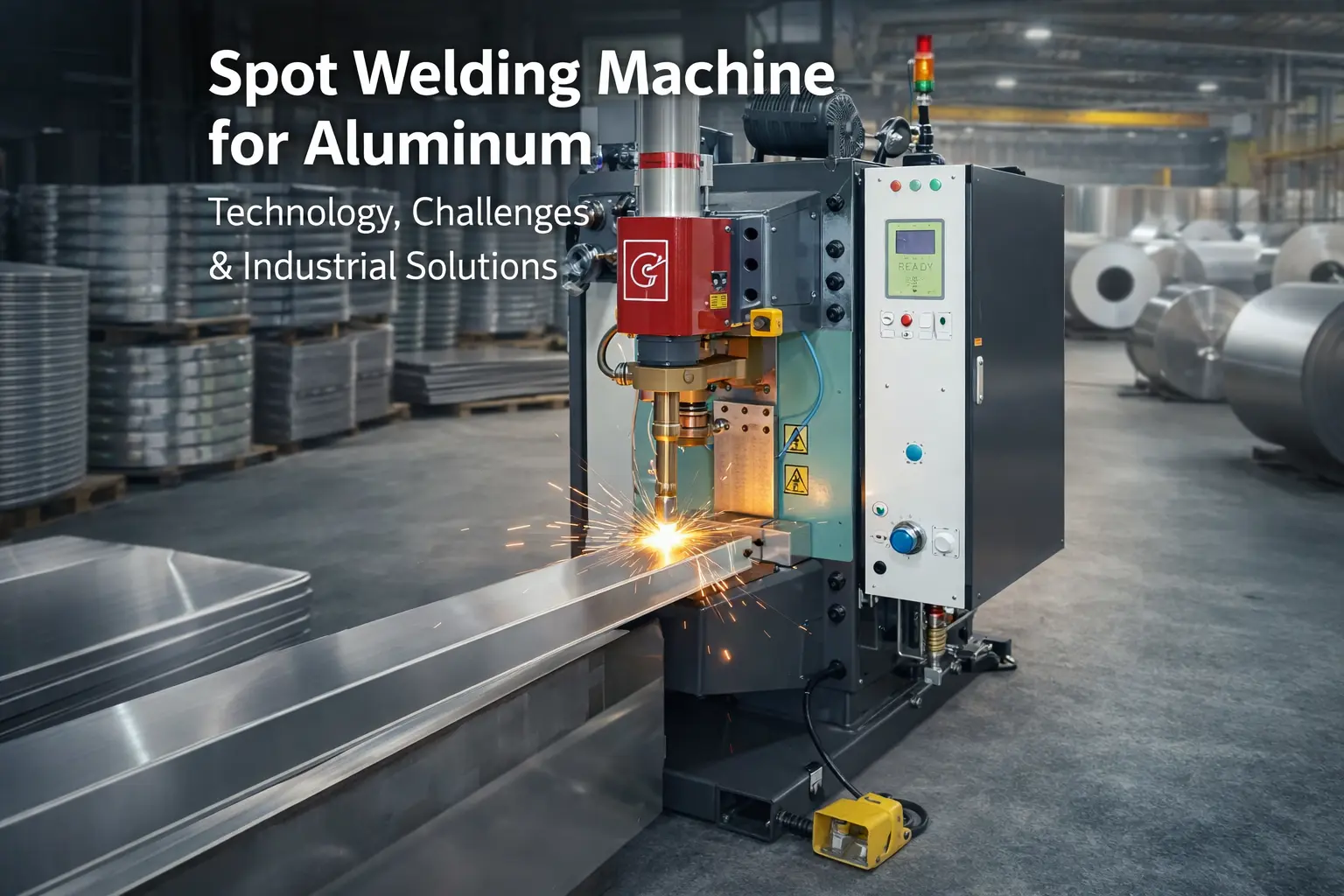
In today’s competitive manufacturing landscape, aluminum has emerged as a preferred material across automotive, aerospace, electronics, and industrial sectors due to its lightweight, corrosion resistance, and excellent thermal properties. However, welding aluminum poses unique challenges.
Choosing the right spot welder for aluminum is critical for achieving high-quality joints, operational efficiency, and long-term reliability.
Heron Welder, a global leader in industrial welding and metal-joining solutions, provides advanced resistance welding machines, including spot welders specifically engineered for aluminum and other challenging alloys. This guide explores the principles, applications, and best practices for aluminum spot welding, helping engineers, OEMs, and factory managers make informed decisions.
Understanding Aluminum Spot Welding
Spot welding is a type of resistance welding where two metal sheets are joined by applying heat generated from electrical resistance and pressure through electrodes at localized points. Aluminum, unlike steel, has higher thermal and electrical conductivity, which requires specialized equipment and process adjustments to ensure strong, defect-free welds.
Key considerations when welding aluminum include:
-
High Thermal Conductivity: Aluminum dissipates heat quickly, requiring higher current or longer weld time.
-
Oxide Layer: Aluminum naturally forms a tough oxide layer that must be broken or managed for proper electrode contact.
-
Material Thickness: Aluminum sheets often vary in thickness; consistent electrode pressure and welding parameters are essential.
Heron’s spot welders for aluminum are engineered to deliver precise control over current, pressure, and timing, ensuring consistent weld quality across production lines.
Applications of Aluminum Spot Welding
Aluminum spot welding is widely applied in sectors requiring lightweight yet strong structures:
Automotive and EV Manufacturing
Aluminum is increasingly used in car bodies, chassis components, and electric vehicle battery housings. Spot welding ensures high-strength joints while supporting automated production lines.
Aerospace and Aviation
Aircraft components demand weight reduction without compromising strength. Resistance spot welding aluminum sheets enables durable joints in fuselage panels, interior structures, and secondary assemblies.
Electronics and Appliances
From heat sinks to enclosures, aluminum’s electrical and thermal properties make spot welding ideal for assembling high-performance electronics and appliances efficiently.
Industrial Equipment
Hydraulic tanks, aluminum frames, and machinery housings benefit from reliable spot welding to maintain structural integrity under operational stress.
Spot Welding Aluminum vs. Steel: Key Differences
While steel is easier to weld due to lower conductivity and no tough oxide layer, aluminum requires tailored solutions:
| Feature | Steel Spot Welding | Aluminum Spot Welding |
|---|---|---|
| Electrical Conductivity | Lower | Higher, needs higher current |
| Thermal Conductivity | Moderate | High, rapid heat dissipation |
| Oxide Layer | Minimal | Thick, requires electrode care |
| Electrode Life | Longer | Shorter if not optimized |
| Weld Appearance | Shiny, consistent | Prone to splash, careful control needed |
Heron’s spot welders address these differences by combining precise current control, water-cooled electrodes, and process monitoring to reduce defects and maximize throughput.
Choosing the Right Spot Welder for Aluminum
Selecting an aluminum spot welder requires evaluating several factors:
-
Current and Power Requirements: Higher conductivity materials need machines capable of delivering controlled, high-current pulses.
-
Electrode Design: Water-cooled copper alloy electrodes prolong life and improve heat transfer efficiency.
-
Automation Integration: Robotic arms and programmable controllers ensure repeatable welds, essential for high-volume production.
-
Quality Monitoring: Advanced sensors and monitoring systems detect welding anomalies and prevent rejects.
-
Flexibility: Machines capable of welding multiple thicknesses and aluminum grades enhance production versatility.
Heron Welder offers a range of spot welding solutions from standalone units to fully automated production lines, allowing manufacturers to scale operations without compromising quality.
Best Practices for Aluminum Spot Welding
To maximize weld quality and productivity:
-
Surface Preparation: Clean aluminum surfaces to reduce oxide interference.
-
Optimize Weld Parameters: Adjust current, time, and pressure for material thickness and alloy.
-
Electrode Maintenance: Regularly dress electrodes to maintain consistent weld size and prevent overheating.
-
Cooling Management: Use water-cooled electrodes to manage heat accumulation.
-
Process Automation: Employ Heron controllers and automation systems for precision, repeatability, and traceability.
Implementing these practices reduces defects such as expulsion, weak welds, and electrode degradation.
Why Choose Heron Welder for Aluminum Spot Welding?
Heron Welder is trusted by global manufacturers for industrial welding solutions due to:
-
Expertise in Aluminum Welding: Decades of experience in resistance welding aluminum and challenging alloys.
-
Advanced Equipment: High-current spot welders, MFDC machines, and automated systems engineered for consistent performance.
-
End-to-End Solutions: From machine selection and process consultation to installation, training, and maintenance.
-
Customization: Solutions tailored for OEMs, automation integrators, and high-volume production environments.
By leveraging Heron’s technology, manufacturers can increase efficiency, reduce scrap, and ensure high-quality aluminum assemblies.
FAQs About Spot Welding Aluminum
1. Can I use a standard steel spot welder for aluminum?
No. Aluminum requires specialized electrodes and higher current due to its thermal and electrical properties.
2. How do I prevent electrode sticking on aluminum?
Use water-cooled copper alloy electrodes and adjust weld parameters (current, pressure, and time) carefully.
3. What thickness of aluminum can spot welders handle?
Modern spot welders can weld aluminum sheets from 0.5 mm up to 6 mm or more, depending on the machine and process settings.
4. Is automation necessary for aluminum spot welding?
While manual welding is possible, automation ensures repeatability, precision, and throughput, especially in high-volume production.
5. How often should electrodes be maintained?
Electrodes should be inspected and dressed regularly to maintain weld quality and prevent expulsion or inconsistent welds.
Conclusion: Partner with Heron for Aluminum Spot Welding Success
Aluminum spot welding is a critical process for manufacturers seeking lightweight, strong, and reliable assemblies. Selecting the right equipment, optimizing process parameters, and integrating automation are key to production efficiency.
Heron Welder combines decades of expertise, advanced technology, and tailored solutions to help manufacturers overcome aluminum welding challenges. Whether you need standalone spot welders or fully automated production lines, Heron delivers precision, reliability, and performance.
Request a quote or consult with Heron today to explore the best spot welding solutions for aluminum and elevate your manufacturing capabilities.

 Turkish