


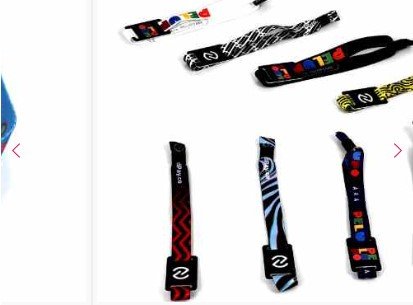
A woven wristband is a special RFID tag designed to be worn as a wristband. These wristbands are woven or made of fabric and have RFID chips embedded in them, as opposed to rigid tags or cards. They are comfortable, durable and can be identified wirelessly and therefore suited for areas where individuals require wearing a tag in a secure place for a long time.
These RFID woven wristband can accommodate different types of frequency, including LF (125kHz), HF (13.56MHz) and UHF (860-960MHz) to meet different read-range requirements and integration applications. These can be personalised using printed logos, encoded data like URLs or unique IDs, and they are dustproof and waterproof to give them strong outdoor performance.
The RFID Production Process Explained
Professional rfid production is the core of the high-quality RFID solutions. This would usually involve:
1. Design and Chip Selection
The RFID chips are selected depending on frequency and use. As an example, short-range access control is best served by HF chips, whereas long-range identification is served by UHF chips.
2. Antenna Fabrication
Antennas are important in transmissions and reception of signals. Precision engineering makes the tag effective to communicate with the readers in real-world situations.
3. Assembly & Integration
Tags can be in the form of woven wristbands or stiff formats, but these are assembled, and the chips, antennas, and casings are assembled. This step can be customised by printing, encoding or branding.
4. Quality Assurance and Testing
All tag models are tested regarding the range of reading, durability and environmental resistance. This will see to it that the RFID system is reliable when deployed to all the intended use cases.
Manufacturing of high-quality rfid contributes to ensuring that organizations ease their data error, automate manual processes and improve precision in tracking assets or identities.
Why Woven Wristbands Are Popular
The RFID woven wristband is unique because of its practicality and comfort to the user. The reason as to why they have been adopted extensively is as follows:
Comfortable and Durable
The wristbands are made of fabric materials, making them soft to wear throughout extended durations of time, when there is a multi-day or an activity to be undertaken. They also resist water and dust, hence they can be used outdoors.
Customizable for Branding
Woven wristbands can be customised with logos, colours, and print messaging to the fullest to fit the brand identity or event themes in case of festivals, hospitals or corporate events.
Efficient Identification
These wristbands can be used to perform speedy and non-contact identification when incorporated into an RFID ecosystem. Wristband scanning streamlines and secures event registration, payment points, or patient registration.
Scalability
Woven wristbands can be scaled at a large scale, even as small as a conference. They sponsor customised access privileges - like VIP entrance privileges or an alternative event section.
Common Applications of Woven Wristbands
Woven RFID wristbands can be used in a variety of situations:
Event Access Control:
Applied to identify people attending music concerts, trade shows and gates of festivals in a short time. They minimise queues and facilitate security checks.
Cashless Payments:
Other systems connect the wristbands with payment accounts so that a user can make purchases using a mere scan rather than having to use cash or cards, which increases convenience and quick purchases.
Patient Tracking and Healthcare:
Medical care RFID wristbands may contain patient identifiers or medical data and assist in the easier tracing of care events and prevention of errors in medical practice.
Sports and Fitness Events:
During marathons or fitness events, RFID woven wristbands allow proper timing of participants, checking them and collecting data without any manual intervention.
Conference Management:
Wristbands improve the check-in process at networking events or exhibitions and provide effective management of attendees.
Integrating Woven Wristbands into Your System
To be successfully implemented, woven wristbands should be complemented by readers, programmes, and back office systems:
Choose the Right Frequency:
LF is not suitable for long-range and high-security settings. HF is used with contactless cards and moderate range reads, whereas UHF can be used to track long distances in a wider area.
Plan Reader Locations:
RFID readers can be placed strategically to guarantee quality performance. Place readers at entry points, service zones and feedback stations depending on your workflow.
Ensure Data Security:
Secure IDs and encrypted data encoded on wristbands will minimise the threat of unauthorised access and will facilitate safe transactions.
Measuring and Sustaining Performance:
Periodic software upgrades and hardware inspections can be used to maintain both time and performance accuracy, particularly where the deployment is a high-traffic system.
Conclusion: Smart Identification with RFID Technology
Since RFID technology has been utilised to design and engineer solutions in RFID production to wearable devices such as the RFID woven wristband, RFID technology has been recreating identification, tracking, and access management processes in industries.
In case you are willing to have trusted RFID systems that suit your purpose, be it events, healthcare or asset management, you may consider the all-inclusive solutions of TopTag Technology Co Ltd, a reputable manufacturer and customizer of RFID.
FAQs
Q1: What is the frequency of the woven wristbands?
A1: These wristbands can do various frequencies such as 125kHz (LF), 13.56MHz (HF), and 860-960MHz (UHF) according to the application requirements.
Q2: Are woven wristbands customisable?
A2: Yes -they are usually marked with personalised logos, colour schemes, printing and encrypted data to identify individuals.
Q3: Do RFID wristbands that are woven reuse?
A3: There can be those models that can be reused and others that can be discarded, depending on the event or operation needs.

 Turkish