


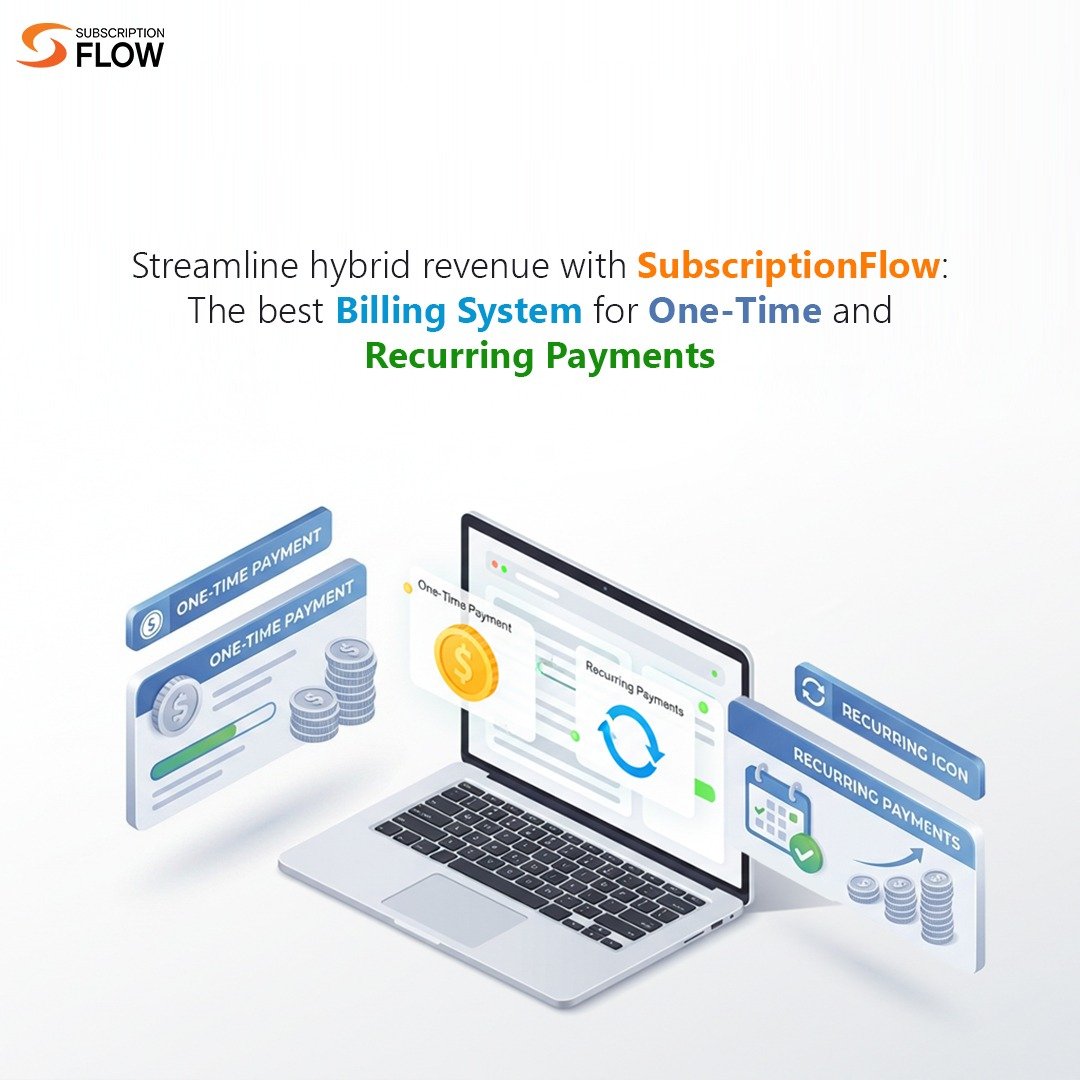
In today’s hybrid revenue economy, businesses are no longer operating on a single pricing model. Customers expect flexibility. Some prefer one-time purchases, while others opt for subscriptions that provide continuous value. Managing these two billing models in separate systems creates operational inefficiencies, reporting gaps, and revenue leakage. To survive and scale in this dynamic environment, companies need a unified billing system that can seamlessly handle both one-time and recurring payments without complexity.
What Defines the Best Billing System?
A powerful billing system must centralize payment management within a single dashboard. When businesses can manage subscriptions, one-time invoices, customer profiles, and transaction histories in one place, they eliminate the need for multiple disconnected tools. Unified systems provide synchronized data, consolidated reporting, and real-time payment visibility, enabling better financial decision-making.
Automation is another essential feature. The best billing platforms go beyond simple payment collection. They automate subscription renewals, apply smart retry logic for failed payments, manage dunning workflows, generate scheduled invoices, and support full subscription lifecycle management. Automation reduces manual errors, saves operational time, and ensures predictable recurring revenue.
Customer self-service portals also play a vital role. Modern customers expect control over their subscriptions. A built-in portal allows users to upgrade, downgrade, pause, or cancel subscriptions independently. This not only enhances customer satisfaction but also reduces the burden on support teams and shortens response times.
Flexibility in pricing models is equally important. Businesses must be able to experiment with flat-rate pricing, tiered plans, usage-based billing, and hybrid models without rebuilding their billing infrastructure. The ability to adapt pricing strategies quickly is critical for staying competitive in evolving markets.
Finally, seamless integrations and scalability ensure long-term success. A reliable billing system integrates with CRM, accounting software, and payment gateways to maintain data consistency. As businesses grow, the platform should handle high transaction volumes, multiple currencies, global taxation rules, and custom billing workflows without disruption.
Why Managing Hybrid Billing Is Challenging
When companies manage subscriptions and one-time charges in different systems, financial reporting becomes fragmented. Revenue forecasting suffers because data must be manually reconciled across platforms. This increases the risk of errors and consumes valuable time for finance teams.
Subscription upgrades and downgrades add another layer of complexity. Without automated proration and lifecycle management, manual adjustments often lead to billing inaccuracies and customer dissatisfaction. Similarly, failed payments can result in unnecessary churn if there is no automated retry and dunning process in place.
Fragmented reporting tools also limit visibility into customer behavior. Businesses struggle to track lifetime value, monitor churn trends, or analyze total revenue performance when data is scattered. Centralized billing infrastructure solves these challenges by providing a holistic view of the customer lifecycle.
SubscriptionFlow: A Unified Revenue Engine
SubscriptionFlow the best billing system provides a comprehensive solution for businesses operating hybrid billing models. It centralizes recurring billing, one-time invoicing, payment processing, and advanced revenue analytics within a single platform. By eliminating disconnected systems, businesses gain clarity, efficiency, and scalability.
The platform enables companies to generate subscriptions and single invoices from the same dashboard, manage customer profiles centrally, and monitor all transactions within one ecosystem. This unified approach reduces operational complexity and improves accuracy.
Its smart automation engine supports automated renewals, intelligent payment retries, built-in dunning management, subscription plan modifications, and full lifecycle automation. These features significantly reduce manual workload while protecting recurring revenue streams.
SubscriptionFlow also delivers advanced reporting capabilities, including real-time monitoring of Monthly Recurring Revenue (MRR), Annual Recurring Revenue (ARR), one-time revenue tracking, churn analysis, and customer lifetime value insights. With consolidated reporting, businesses can make informed strategic decisions backed by accurate data.
Built for growth, the platform supports multi-currency payments, global tax management, API integrations, custom billing workflows, and multiple payment gateways. Whether a startup or an enterprise organization, businesses can scale confidently without overhauling their billing infrastructure.
Driving Growth Through Unified Billing
Choosing the right billing system directly impacts long-term profitability. Automation reduces manual errors in invoicing and renewals. Centralized reporting improves cash flow visibility and forecasting accuracy. Smart dunning and retry logic help minimize churn, while frictionless checkout experiences increase conversion rates.
A unified, automated, and scalable billing platform empowers businesses to optimize revenue, enhance customer retention, and expand globally. In a world where hybrid pricing models are becoming the norm, companies need more than basic invoicing software. They need a complete revenue engine capable of managing both one-time and recurring payments seamlessly.
SubscriptionFlow delivers that unified infrastructure, helping businesses reduce revenue leakage, streamline operations, and accelerate sustainable growth.

 English