


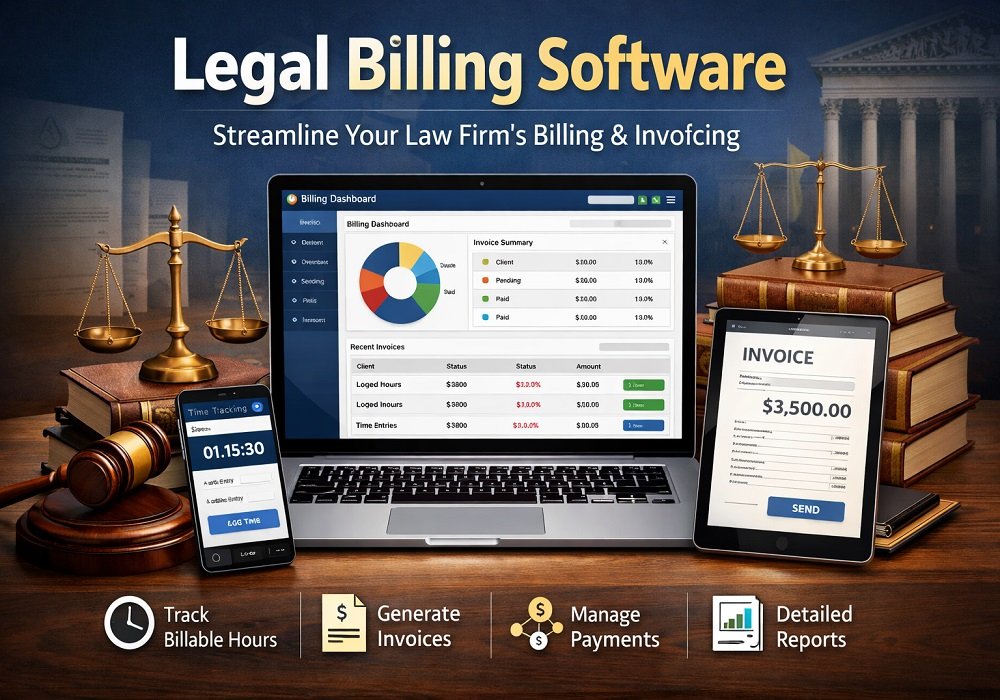
Running a successful law firm today requires more than legal expertise. Administrative efficiency—especially around billing—plays a critical role in profitability, customer satisfaction, and long-term growth. Yet many firms still rely on manual processes that drain time, increase errors, and frustrate clients.
Billing automation , powered by modern legal billing software , offers a practical solution. By automating time tracking, invoicing, and payments, law firms can streamline operations, improve cash flow, and refocus their energy on delivering exceptional legal services.
Why Billing Is a Bottleneck for Law Firms
Billing is one of the most complex operational challenges in a law firm. Attorneys and staff often juggle:
-
Manual time entry recorded after the fact
-
Inconsistent billing formats across matters
-
Delayed invoice generation
-
Payment follow-ups that consume staff time
These inefficiencies don't just affect internal operations—they directly impact the client experience. Late or unclear invoices can erode trust and lead to delayed payments or disputes.
Billing automation addresses these issues at the root by creating a more accurate, transparent, and efficient workflow.
What Is Billing Automation in Legal Practice?
Billing automation uses legal billing software to manage the full billing lifecycle with minimal manual intervention. Core capabilities typically include:
-
Automated time and expense tracking
-
Customizable invoice generation
-
Compliance with client billing guidelines
-
Integrated online payment processing
-
Real-time financial reporting
Instead of reacting to billing at the end of the month, firms gain continuous visibility into billable activity and revenue performance.
Key Benefits of Billing Automation
1. Improved Accuracy and Compliance
Manual billing increases the risk of missed time entries, math errors, and non-compliant invoices. Automated systems capture billable time in real time and apply predefined billing rules consistently.
Result: Fewer write-offs, reduced disputes, and invoices that meet client and insurer requirements.
2. Faster Billing Cycles and Better Cash Flow
Automated invoicing allows firms to generate and send bills immediately at the end of a billing period—or even on demand. Many platforms also support automated payment reminders and online payments.
Result: Shorter payment cycles and more predictable cash flow.
3. Time Savings for Attorneys and Staff
Every hour spent on administrative tasks is an hour not spent serving clients. Automated time tracking and billing workflows significantly reduce administrative overhead.
Result: Attorneys focus on legal work; staff focus on higher-value operational tasks.
4. Enhanced Client Transparency
Modern legal clients expect clarity and convenience. Detailed, easy-to-read invoices and flexible payment options improve trust and satisfaction.
Result: Stronger client relationships and improved retention.
Real-World Example: From Manual to Modern
Consider a mid-sized litigation firm that relied on spreadsheets and manual invoicing. Billing took nearly two weeks each month, and delayed payments were common.
After implementing legal billing software with automation features, the firm:
-
Reduced billing preparation time by over 60%
-
Improved invoice accuracy and reduced client disputes
-
Cut average payment time from 45 days to under 25 days
The shift didn't just improve finances—it reduced staff stress and improved overall operational confidence.
Actionable Tips for Implementing Billing Automation
Choose Software Built for Legal Workflows
Generic accounting tools often fall short for law firms. Look for legal billing software designed specifically for trust accounting, matter-based billing, and legal compliance.
Standardized Billing Practices Firm-Wide
Automation works best when billing rules are consistent. Define standard billing rates, time entry guidelines, and invoice formats before implementation.
Train Your Team Thoroughly
Even the best technology fails without adoption. Invest in onboarding and ongoing training to ensure attorneys and staff understand how automation benefits them directly.
Use Reporting to Drive Better Decisions
Automated billing systems provide powerful insights into realization rates, profitability by matter, and payment trends. Use this data to refine pricing strategies and resource allocation.
Why Billing Automation Supports Long-Term Growth
Billing automation is more than a back-office upgrade—it's a strategic investment. As firms scale, manual processes become unsustainable. Automated systems grow with your firm, supporting higher case volumes without proportional increases in administrative costs.
From solo practitioners to large firms, legal billing software enables consistent, compliant, and client-friendly billing that strengthens both operations and reputation.
Final Thoughts
In an increasingly competitive legal landscape, operational efficiency is no longer optional. Billing automation empowers law firms to reduce errors, improve cash flow, and deliver a better client experience—all while freeing valuable time for legal work.
By adopting modern legal billing software, firms can transform billing from a persistent pain point into a strategic advantage—one that supports sustainable growth and long-term success.

 Turkish