


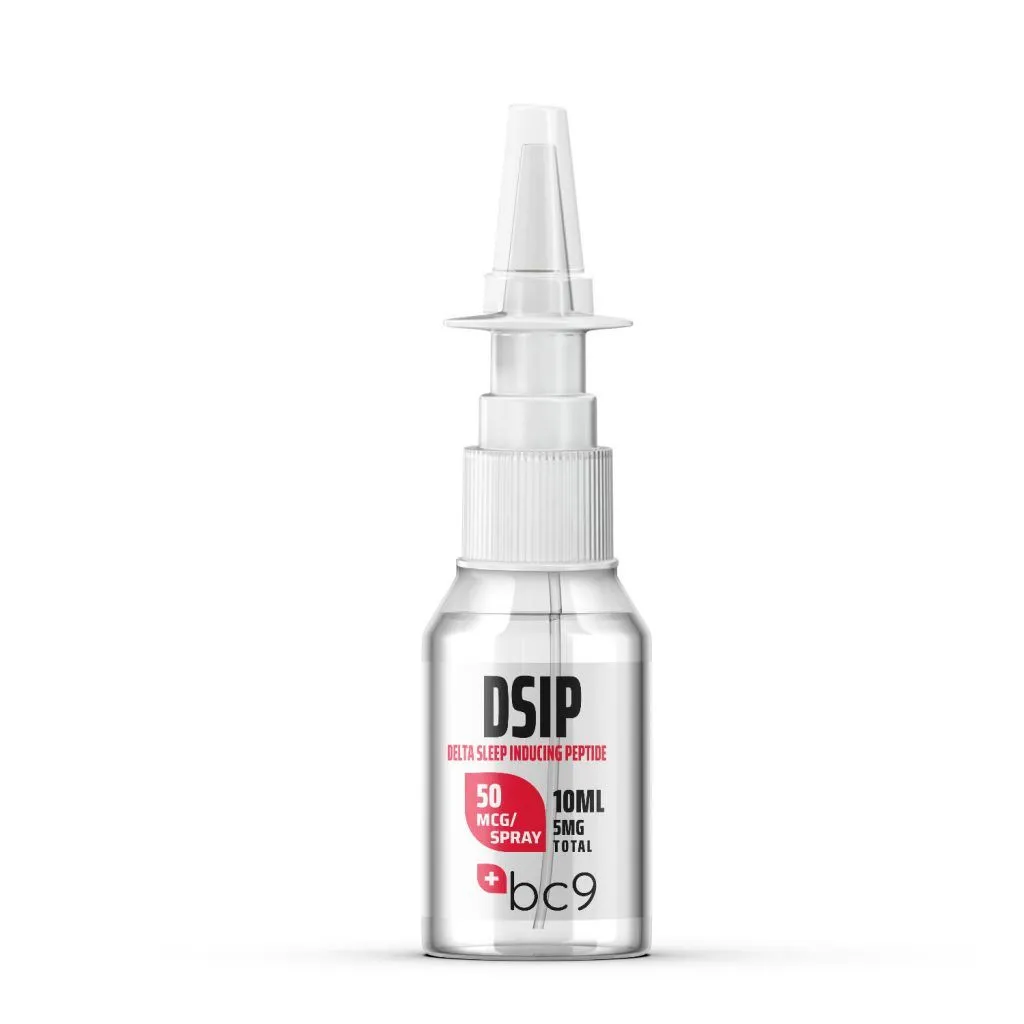
DSIP nasal spray has become a focal point of modern peptide research due to its unique delivery pathway and the growing interest in Delta Sleep–Inducing Peptide (DSIP). Researchers are exploring how this naturally occurring neuropeptide interacts with the central nervous system and whether intranasal administration can provide a more direct route to targeted receptors. The nasal cavity offers a highly vascularized environment with proximity to the olfactory and trigeminal neural pathways, making it an attractive option for compounds that require rapid neurological engagement.
Unlike oral delivery, which must pass through the gastrointestinal tract and hepatic metabolism, DSIP nasal spray is designed to bypass first-pass degradation. This method is believed to preserve molecular integrity and potentially improve bioavailability. For laboratories studying neuroregulation, circadian biology, and stress physiology, the intranasal route represents a practical model for observing DSIP activity in real time.
What Is Delta Sleep–Inducing Peptide?
Delta Sleep–Inducing Peptide is a short-chain neuromodulator first isolated from rabbit cerebral venous blood. Early investigations linked DSIP to the regulation of slow-wave sleep, but subsequent studies broadened its profile to include interactions with endocrine, emotional, and metabolic systems. The peptide appears to influence neurotransmitters such as GABA, serotonin, and dopamine networks that govern relaxation, resilience to stress, and overall neurochemical balance.
Interest in DSIP nasal spray stems from the hypothesis that direct mucosal absorption may mirror the peptide’s natural movement within the brain more closely than other delivery systems. Researchers value this approach when modeling sleep architecture, adaptive stress responses, and hypothalamic–pituitary communication.
Why the Nasal Delivery Method Matters
The nasal route is increasingly recognized in pharmaceutical science for molecules that target the brain. The epithelium inside the nasal cavity provides access to perineural channels that connect to the central nervous system. DSIP nasal spray leverages this anatomical gateway, potentially reducing the amount of compound required to observe biological effects while minimizing systemic exposure.
Key advantages under investigation include:
- Rapid Onset of Action: The proximity to neural tissue may shorten the time between administration and measurable neurophysiological changes.
- Improved Molecular Stability: Avoidance of gastric enzymes and liver metabolism helps protect delicate peptide structures.
- Non-Invasive Application: Compared with injections, intranasal sprays allow repeated administration in research settings without tissue trauma.
- Targeted Neurological Reach: Transport along olfactory neurons offers a theoretical path directly to limbic and hypothalamic regions.
Mechanisms Being Explored in Current Studies
Scientists examining DSIP nasal spray focus on several mechanistic pathways:
- Sleep Modulation – DSIP is studied for its capacity to influence delta wave activity and the transition between sleep stages. Electroencephalographic monitoring in experimental models evaluates whether intranasal delivery alters the depth or continuity of rest cycles.
- Stress and Cortisol Regulation – Evidence suggests DSIP may interact with the hypothalamic–pituitary–adrenal axis. Researchers measure cortisol patterns and autonomic markers to determine if the peptide supports adaptive stress responses.
- Neurotransmitter Balance – Laboratory assays investigate how DSIP affects GABAergic and serotonergic signaling, systems intimately tied to mood stability and cognitive performance.
- Antioxidant and Neuroprotective Pathways – Preliminary cellular studies explore whether DSIP contributes to mitochondrial efficiency and resistance to oxidative stress within neurons.
DSIP Nasal Spray vs. Other Delivery Formats
Traditional peptide administration often relies on injections or oral capsules. Each method presents limitations that DSIP nasal spray seeks to overcome. Oral forms face enzymatic breakdown, while injectable routes, though effective, introduce barriers related to compliance and tissue irritation. Intranasal systems aim to combine efficiency with practicality, offering a repeatable model for long-term investigations into circadian and neurological health.
Researchers also analyze particle size, pH balance, and absorption enhancers within DSIP nasal spray formulations. These variables determine how consistently the peptide traverses mucosal membranes and reaches neural targets.
Safety Considerations in Research Settings
While DSIP is an endogenous molecule, structured evaluation remains essential. Studies emphasize:
- Sterility and preservative selection to protect nasal tissues
- Stability testing to maintain peptide conformation
- Monitoring for local irritation or inflammatory responses
- Ethical oversight when translating animal findings to human models
Responsible laboratories treat DSIP nasal spray as an investigational tool, documenting pharmacokinetics and physiological markers before drawing conclusions about broader applications.
Future Directions for DSIP Nasal Spray Research
The next generation of studies is expected to integrate neuroimaging, wearable sleep analytics, and genomic profiling. By combining these technologies, scientists hope to map how DSIP influences neural circuits associated with restoration and resilience. There is particular enthusiasm for exploring personalized responses, as genetic differences in receptor expression may explain why individuals exhibit varied sensitivity to the peptide.
Collaboration between neuroscientists, pharmacologists, and formulation chemists will refine DSIP nasal spray into a more precise research instrument. Understanding optimal droplet dispersion, absorption kinetics, and receptor affinity could unlock clearer insights into the peptide’s true biological role.
Conclusion
DSIP nasal spray represents a compelling intersection of peptide science and advanced delivery technology. By utilizing the nasal–brain corridor, researchers gain a window into how Delta Sleep–Inducing Peptide may influence sleep physiology, stress adaptation, and neurochemical harmony. Although investigations continue, the intranasal method has already reshaped the way laboratories approach this multifaceted molecule, positioning DSIP nasal spray at the forefront of contemporary neurobiological research.

 Turkish