


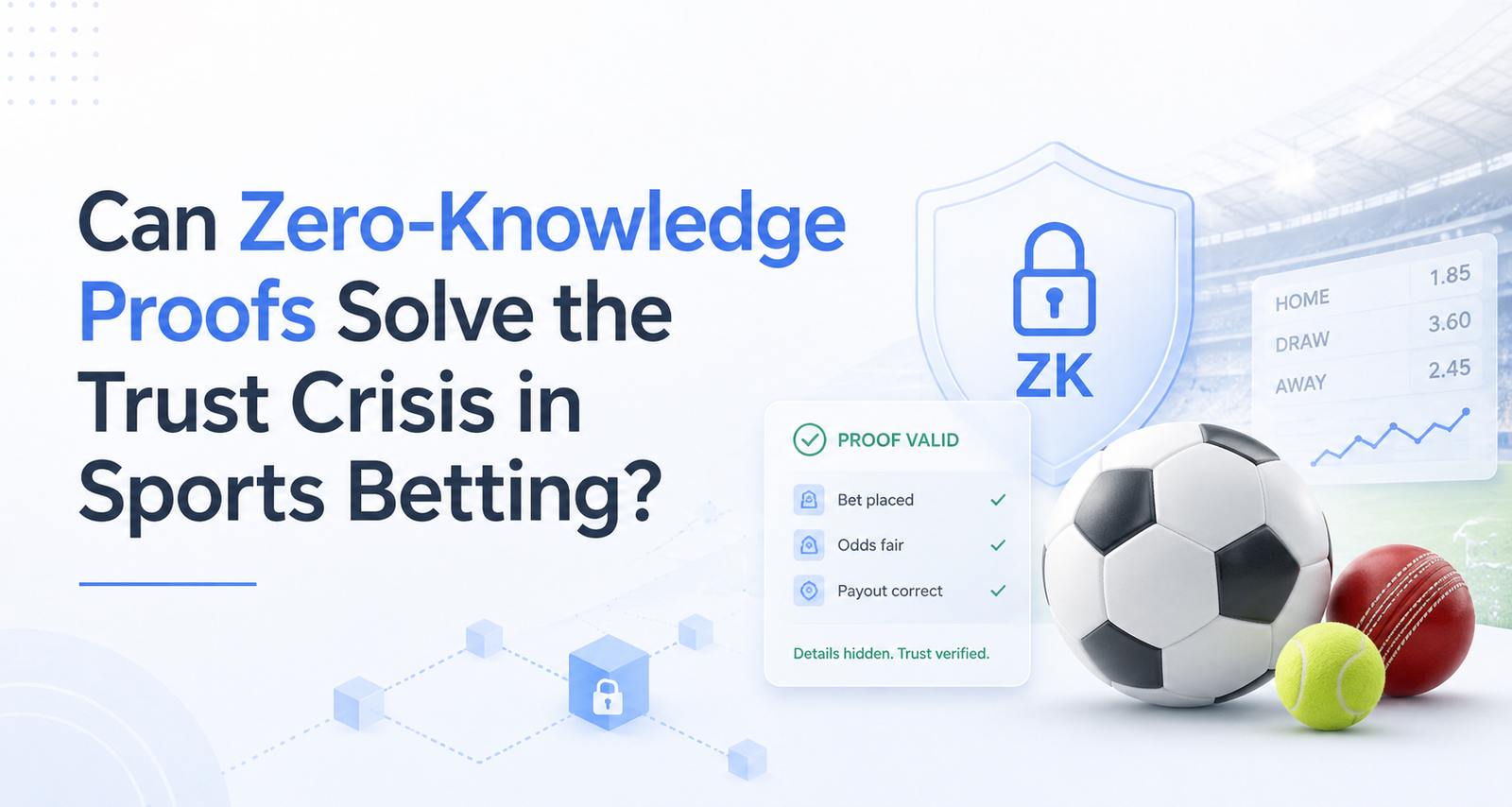
The sports betting industry is evolving rapidly as operators seek new ways to improve security, privacy, and regulatory compliance. With increasing concerns around data protection, user trust, and cyber threats, betting platforms are investing in advanced technologies that can provide greater transparency without compromising sensitive information. This is one of the key reasons why a modern sports betting software development company is exploring the potential of zero-knowledge cryptography to transform the future of online wagering.
Zero-knowledge cryptography, particularly Zero-Knowledge Proofs (ZKPs), allows one party to prove the validity of information without revealing the information itself. Originally popularized in blockchain ecosystems, this technology is now finding practical applications across multiple industries, including sports betting. As privacy regulations become stricter and users demand more secure digital experiences, zero-knowledge cryptography is emerging as a powerful solution for sportsbook operators.
Understanding Zero-Knowledge Cryptography
Zero-knowledge cryptography is based on a simple but powerful concept: proving something is true without revealing the underlying data.
For example, a sportsbook can verify that a bettor meets age requirements, resides in an approved jurisdiction, or has passed identity verification checks without exposing personal documents or sensitive user details. Instead of sharing the actual data, the system provides mathematical proof that the conditions have been met.
This approach creates a higher level of security while maintaining regulatory compliance.
Why Privacy Matters More Than Ever in Sports Betting
The sports betting industry handles large volumes of sensitive information, including:
-
Personal identification details
-
Payment information
-
Betting history
-
Location data
-
Financial transactions
Traditional verification methods require operators to store substantial amounts of user data. While necessary for compliance, this creates attractive targets for cybercriminals.
Recent years have seen increasing cases of data breaches across online gaming platforms. Users are becoming more aware of privacy risks and are seeking platforms that offer stronger protection for their information.
Zero-knowledge cryptography helps address these concerns by minimizing the amount of sensitive data that must be stored or shared.
Enhancing User Trust Through Privacy
Trust is one of the most valuable assets for any betting platform. Players want confidence that their personal information is protected and their wagers are handled fairly.
By implementing zero-knowledge systems, sportsbooks can demonstrate a commitment to privacy and security. Users can verify transactions, account balances, and identity checks without exposing unnecessary personal information.
This creates a more transparent ecosystem where players feel secure while maintaining control over their data.
As competition increases within the sports betting market, enhanced trust can become a significant differentiator.
Strengthening Compliance and KYC Processes
Know Your Customer (KYC) requirements are critical for regulated sportsbooks. Operators must verify identities, confirm player eligibility, and prevent fraudulent activities.
Traditional KYC systems often require users to upload documents such as:
-
Passports
-
Driver's licenses
-
Utility bills
-
Bank statements
These documents contain sensitive personal information that must be stored securely.
With zero-knowledge proofs, operators can verify compliance requirements without retaining extensive personal data. A user can prove eligibility, age, or residency while revealing only the minimum information necessary.
This approach reduces compliance risks while improving the overall customer experience.
Preventing Fraud and Account Abuse
Fraud remains a major challenge in the sports betting sector. Common issues include:
-
Multi-accounting
-
Bonus abuse
-
Identity fraud
-
Money laundering attempts
Zero-knowledge cryptography offers a more secure framework for user verification. Since credentials can be validated without exposing underlying information, fraudsters face greater difficulty manipulating the system.
Operators can verify that a player is unique, eligible, and compliant without storing excessive personal data that could potentially be compromised.
This creates a safer betting environment for both operators and legitimate users.
Improving Blockchain-Based Sportsbooks
Blockchain sportsbooks are becoming increasingly popular due to their transparency and decentralized infrastructure.
However, public blockchain networks can create privacy concerns because transactions are often visible to everyone. While wallet addresses may be pseudonymous, advanced analytics can sometimes connect activities to specific users.
Zero-knowledge technology helps solve this challenge by enabling private transactions while preserving blockchain transparency.
Users can place bets, verify outcomes, and receive payouts without exposing sensitive financial information to public observers.
This balance between transparency and privacy represents a major advancement for blockchain-powered betting platforms.
Faster and More Secure Payments
Payment security remains a top priority for sportsbook operators.
Zero-knowledge cryptography can enhance payment systems by allowing transactions to be verified without exposing account details or transaction histories. This reduces the risk of financial fraud while maintaining transaction integrity.
Benefits include:
-
Increased payment privacy
-
Reduced risk of data leaks
-
Faster transaction validation
-
Improved customer confidence
As digital payment technologies continue evolving, zero-knowledge systems are expected to play a larger role in secure sportsbook transactions.
Meeting Future Regulatory Expectations
Governments and regulators worldwide are introducing stricter data privacy requirements. Frameworks such as GDPR and similar regulations emphasize minimizing data collection and protecting user information.
Sportsbook operators that adopt privacy-focused technologies today will be better positioned to meet future compliance demands.
Zero-knowledge cryptography aligns naturally with modern privacy principles by reducing data exposure while maintaining verifiable compliance.
This makes it an attractive long-term investment for forward-thinking operators.
Competitive Advantages for Sports Betting Operators
Platforms that implement zero-knowledge technology gain several strategic advantages:
-
Stronger user trust
-
Enhanced security
-
Reduced data storage risks
-
Improved compliance processes
-
Better fraud prevention
-
Greater payment privacy
-
Future-ready infrastructure
As users become increasingly privacy-conscious, these advantages can significantly influence player acquisition and retention.
The Future of Zero-Knowledge Sports Betting
Zero-knowledge cryptography is no longer a theoretical concept reserved for blockchain researchers. It is becoming a practical tool that can solve real-world challenges within the sports betting industry.
From identity verification and fraud prevention to secure payments and regulatory compliance, the technology offers substantial benefits for operators and players alike. As privacy concerns continue to grow, more sportsbooks are expected to integrate zero-knowledge solutions into their platforms.
Businesses looking to build secure, scalable, and future-proof betting ecosystems should partner with an experienced sportsbook software provider that understands both regulatory requirements and emerging cryptographic technologies. Those who adopt these innovations early will be better positioned to lead the next generation of online sports betting.

 English