


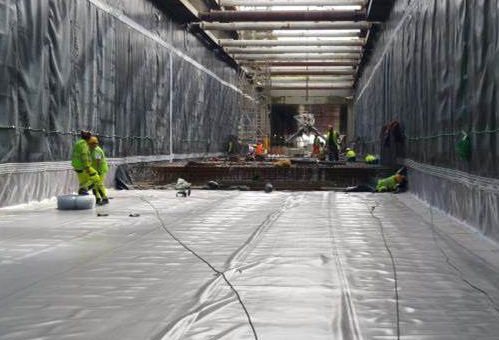
Waste management is no longer just about finding a place to dump waste. Over the last few years, the focus has shifted toward long-term environmental safety, and honestly, this shift was necessary. As cities continue to grow and industrial activities expand, the amount of waste generated every day is increasing at a pace that traditional disposal methods simply cannot handle efficiently. The concern is bigger, however, is not just the waste itself but what happens after it is deposited in a landfill.
One of the most serious challenges in landfill infrastructure is leachate seepage. When rainwater or internal moisture comes into contact with solid waste, it creates a liquid mixture that often contains chemicals, harmful residues, and contaminants. Over time, this liquid starts moving downward through the soil. At first, it may not appear to be a major issue, but the long-term consequences are severe. Soil contamination, groundwater pollution, and surrounding ecosystem damage can continue for years. This is exactly why landfill geomembrane systems are now considered one of the most critical components in modern waste containment infrastructure.
PVC geomembrane technology has changed the way engineers approach landfill protection. Instead of relying only on compacted earth or older containment methods, projects now use a dedicated impermeable lining layer that acts as a protective barrier between waste and the surrounding ground. A properly installed Pvc geomembrane sheet prevents harmful liquids from penetrating into the soil. The entire purpose is simple—keep contamination contained within the landfill system so that it can be safely managed and treated.
What really makes PVC geomembrane stand out is its ability to perform under difficult site conditions. Landfill surfaces are never perfectly smooth. There are slope changes, compacted zones, uneven soil profiles, and continuous settlement movement as waste volume increases. A rigid material would struggle in such conditions. This is where the flexibility of geomembrane becomes extremely valuable. The liner adjusts to the surface profile and continues to maintain barrier continuity, which significantly reduces leakage risk.
Another thing worth noticing is how geomembrane systems are rarely used alone. In many modern landfill projects, Geotextile layers are added as part of the design. This protective layer acts as cushioning support and helps prevent puncture damage caused by aggregates, equipment movement, or sharp waste materials. Honestly, this combination of geomembrane and geotextile creates a much stronger and more reliable containment system.
The relevance of this technology extends far beyond waste containment. The same material principles are widely used in other infrastructure applications as well. You’ll find geomembrane pond liner systems in water reservoirs and aquaculture ponds, geomembrane for canal lining in irrigation networks, geomembrane for dams in water retention projects, and geomembrane for tunnels in underground seepage control. Even road infrastructure and building waterproofing systems use similar waterproofing geomembrane concepts. This versatility itself is a strong sign of engineering reliability.
From an environmental planning perspective, landfill geomembrane plays a much bigger role than most people initially realize. It directly supports soil protection and groundwater preservation. Once contamination enters groundwater, the damage spreads beyond the landfill site and can affect nearby communities, agriculture, and water resources. Preventing that risk from the beginning is far more practical and cost-effective than remediation later.
India's infrastructure and urban development landscape is making this technology even more relevant. Municipal waste generation is increasing rapidly, and industrial waste zones are expanding across urban and semi-urban regions. This naturally creates greater demand for engineered waste containment systems. Reliable geomembrane manufacturers india are therefore becoming a vital part of infrastructure planning. Projects now increasingly look for BIS approved geomembrane solutions that comply with BIS IS 15909:2010 standards along with ASTM and EN quality benchmarks. For consultants and project planners, compliance is not just a technical formality—it directly impacts project approval and long-term confidence.
If you ask from a long-term investment perspective, geomembrane systems also make strong financial sense. The installation process may require technical expertise and careful site preparation, but the lifecycle cost is significantly lower compared to dealing with environmental damage and repair costs later. Not saying it's the only solution available, but it is definitely one of the most practical and future-ready options for landfill infrastructure today.
Looking ahead, environmental regulations are only expected to become stricter. Sustainability goals, groundwater protection norms, and waste containment standards will continue to evolve. That means engineered lining systems like PVC geomembrane will move from being a preferred solution to becoming a standard requirement in modern landfill design.
Honestly, if someone is involved in environmental engineering, infrastructure consulting, municipal planning, or industrial waste management, this is one area worth paying serious attention to. Landfill geomembrane is no longer just a technical product. It has become an essential part of responsible and sustainable infrastructure development.

 English