


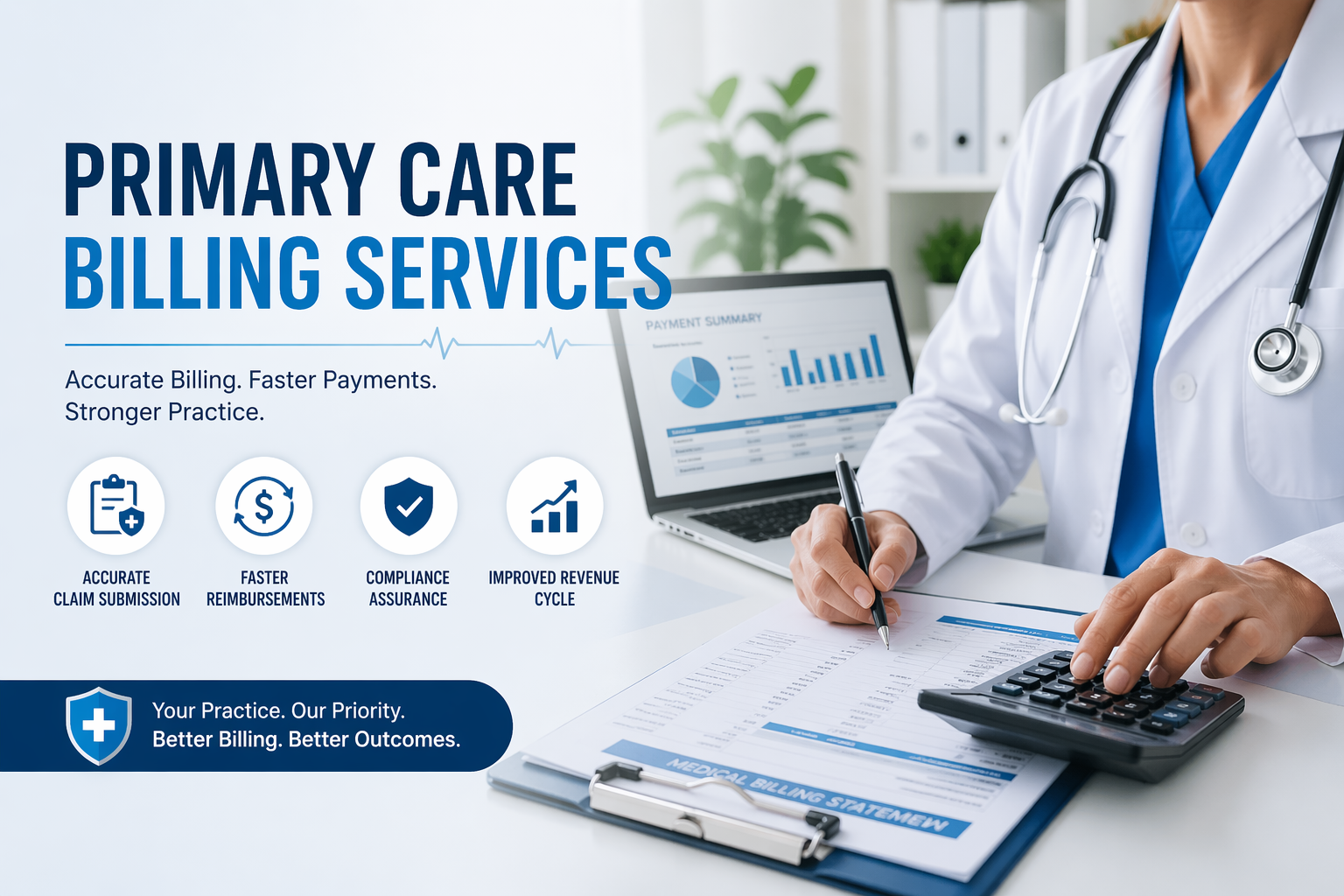
Primary care practices are the backbone of healthcare—but when it comes to billing, they often operate under constant pressure. Tight margins, high patient volumes, and complex insurance rules make it easy for revenue to slip through the cracks. If you’re dealing with delayed reimbursements, frequent claim denials, or administrative overload, you’re not alone. Many clinics struggle to maintain a steady cash flow despite seeing patients all day.
The reality is simple: billing inefficiencies can quietly drain your profits. Even small errors in coding or documentation can lead to denied claims or underpayments. That’s where a primary care billing agency becomes critical. With the right partner, you can streamline operations, reduce errors, and finally get paid what you deserve—without burning out your staff.
Why Primary Care Practices Struggle with Billing
Primary care is unique. Unlike specialty practices that focus on specific procedures, primary care deals with a wide range of services—from preventive visits to chronic disease management. This variety creates billing complexity that’s easy to underestimate.
Here’s why billing becomes a challenge:
1. High Patient Volume, Low Margins
Primary care physicians often see dozens of patients daily. While volume is high, reimbursement per visit is relatively low. That means even small billing errors can significantly impact overall revenue.
2. Complex Coding Requirements
Evaluation and Management (E/M) coding changes frequently. Selecting the correct level based on documentation is critical—but also time-consuming and prone to mistakes.
3. Frequent Insurance Policy Changes
Payers constantly update policies. Staying compliant requires continuous monitoring, which most in-house teams struggle to keep up with.
4. Administrative Burden
Front desk and billing teams are often overloaded. When staff juggle scheduling, patient communication, and billing, accuracy suffers.
5. High Claim Denial Rates
Industry data shows that nearly 15–20% of medical claims are initially denied, and a large portion are never resubmitted. For primary care, this represents a major revenue loss.
This is exactly why many practices turn to a primary care billing agency—to eliminate inefficiencies and recover lost income.
How to Choose the Right Billing Partner
Not all billing companies understand the nuances of primary care. Choosing the right partner can make or break your revenue cycle.
Here’s what to look for:
- Primary Care Expertise
Ensure the agency specializes in family medicine, internal medicine, or general practice billing—not just general medical billing. - Certified Coding Team
Look for certified coders experienced in E/M coding updates and compliance standards. - Transparent Reporting
You should have access to real-time dashboards showing claims, denials, and collections. - Denial Management Process
A strong billing partner actively tracks, analyzes, and resubmits denied claims—not just processes them. - Technology Integration
The agency should seamlessly integrate with your EHR and practice management system. - Compliance & Security
HIPAA compliance and data security protocols are non-negotiable. - Clear Pricing Model
Avoid hidden fees. Most reliable agencies charge a percentage of collections.
Choosing the right primary care billing agency means finding a partner that aligns with your workflow—not one that adds complexity.
How to Reduce Claim Denials in Primary Care (Step-by-Step)
Reducing denials is one of the fastest ways to improve revenue. Here’s how successful practices do it:
1. Verify Patient Eligibility in Real Time
Always confirm insurance coverage before the visit. This prevents billing errors related to inactive or incorrect plans.
2. Improve Documentation Accuracy
Incomplete or vague notes lead to coding errors. Ensure providers document thoroughly to support billed services.
3. Use Correct E/M Codes
Misuse of E/M levels is a common issue. Train staff or outsource to experts who understand current guidelines.
4. Submit Clean Claims the First Time
A “clean claim” has no errors or missing information. Practices that achieve this see faster reimbursements.
5. Track Denial Patterns
Analyze why claims are denied—whether it’s coding, eligibility, or authorization issues—and fix the root cause.
6. Follow Up on Every Denial
Many practices ignore denied claims due to time constraints. A dedicated billing team ensures every claim is reworked and resubmitted.
7. Automate Where Possible
Automation tools can flag errors before submission, reducing human mistakes.
According to industry reports, practices that actively manage denials can recover up to 90% of initially rejected claims—a massive revenue boost.
HIPAA Compliance & Technology in Medical Billing
In today’s digital environment, billing isn’t just about getting paid—it’s also about protecting patient data. Any primary care billing agency you work with must prioritize compliance and technology.
HIPAA Compliance
Billing involves handling sensitive patient information. Your partner must follow strict HIPAA guidelines to ensure data privacy and avoid legal risks.
Secure Data Systems
Look for agencies that use encrypted systems, secure servers, and role-based access controls.
Cloud-Based Platforms
Modern billing solutions offer cloud access, allowing you to monitor performance anytime, anywhere.
AI & Automation
Advanced billing agencies use AI tools to detect coding errors, predict denials, and optimize claim submissions.
EHR Integration
Seamless integration reduces manual data entry and minimizes errors.
Technology isn’t optional anymore—it’s the backbone of efficient revenue cycle management.
How 247 Medical Billing Services Helps Primary Care Practices
This is where 247 medical billing services stands out. Unlike generic billing providers, they focus on delivering tailored solutions for primary care practices.
Here’s how they make a difference:
Specialized Primary Care Knowledge
Their team understands the nuances of E/M coding, preventive services, and chronic care management billing.
End-to-End Revenue Cycle Management
From patient registration to final payment, 247 medical billing services handles every step—so nothing falls through the cracks.
Aggressive Denial Management
They don’t just process claims—they actively track and rework denials to maximize reimbursements.
Real-Time Reporting
You get full visibility into your financial performance with detailed analytics and dashboards.
HIPAA-Compliant Systems
Security is built into every process, ensuring patient data is always protected.
Reduced Administrative Burden
By outsourcing to 247 medical billing services, your staff can focus on patient care instead of paperwork.
Faster Payments & Improved Cash Flow
Clean claim submission and efficient follow-ups mean quicker reimbursements and healthier finances.
For primary care practices struggling with inefficiencies, partnering with the right billing agency can transform operations—and revenue.
Conclusion: Take Control of Your Revenue Today
If your practice is dealing with delayed payments, denied claims, or overwhelmed staff, it’s time to rethink your billing strategy. A reliable primary care billing agency can eliminate inefficiencies, improve accuracy, and boost your bottom line without adding stress to your team.
The right partner doesn’t just handle billing—they become an extension of your practice. With experts like 247 medical billing services, you gain the tools, technology, and expertise needed to thrive in today’s complex healthcare environment.

 English