


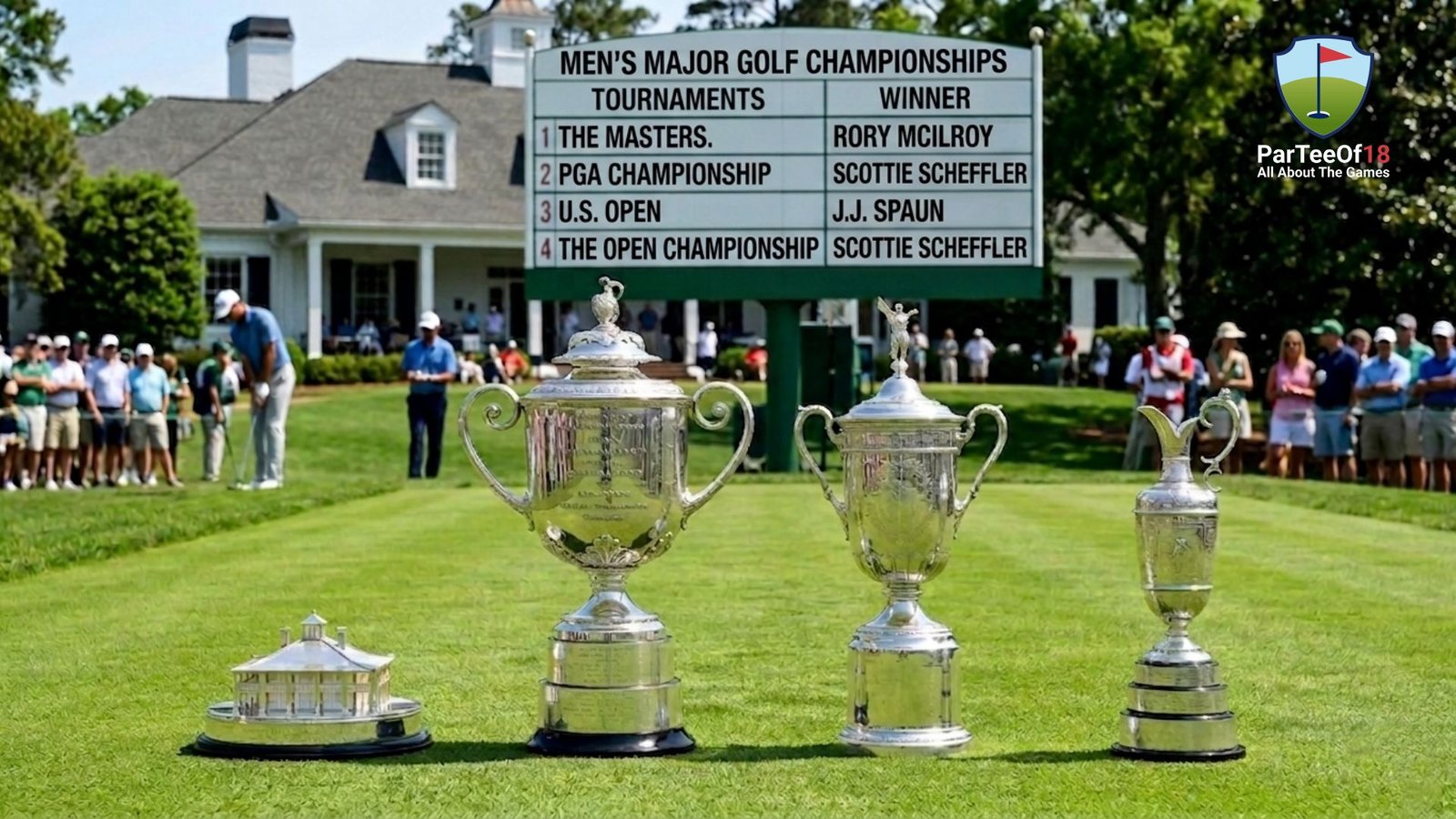
Golf is a sport built on tradition, and nothing represents that better than its most prestigious events. The story of the four golf championships is not just about tournaments it's about how the game itself evolved from a local pastime into a global phenomenon. Understanding their history gives a deeper appreciation for why these events hold such unmatched importance today.
Golf Before the Modern Majors
In the early days of golf, there was no fixed set of “major” tournaments. Instead, prestige was spread across several important competitions, many of which were dominated by amateur players. Events like The Amateur Championship and US Amateur were once considered just as significant as professional tournaments.
However, one event stood above the rest from the beginning The Open Championship, first played in 1860 in Scotland. It was the earliest organized golf competition and quickly became the benchmark for excellence in the sport.
As golf spread to the United States, another key event emerged: the US Open, introduced in 1895. Known for its challenging course setups, it added a new dimension of competitiveness and helped elevate professional golf.
The Role of Legendary Players
The transition from amateur dominance to professional recognition was heavily influenced by iconic figures like Bobby Jones. In 1930, Jones achieved an extraordinary feat by winning four major titles of his era, which included both amateur and professional events.
His success highlighted the importance of elite tournaments and sparked discussions about what should truly count as a “major.” After his retirement, the focus gradually shifted toward professional competitions, as they attracted larger audiences and stronger fields.
The Creation of a New Tradition
The modern era of majors began to take shape with the introduction of The Masters Tournament in 1934. Founded by Bobby Jones and Clifford Roberts, The Masters brought a new level of prestige with its unique traditions, including the famous Green Jacket.
Another important addition was the PGA Championship, which started in 1916 but gained greater importance as professional golf expanded. Its shift from match play to stroke play in 1958 made it more aligned with the other major tournaments.
By the mid-20th century, these four tournaments The Masters, U.S. Open, The Open Championship, and PGA Championship became widely accepted as the defining majors of the sport.
Why These Four Became the Standard?
Not every tournament could achieve “major” status. These four stood out for several reasons:
-
Consistency: They were held regularly and maintained high standards.
-
Competition: They attracted the best players from around the world.
-
Prestige: Winning one carried immense recognition and respect.
-
History: Each tournament built a legacy over decades.
Together, they formed the foundation of what we now recognize as the four golf championships that define greatness in the game.
Growth Through Media and Globalization
The rise of television in the mid-20th century played a major role in popularizing the majors. Fans could now watch dramatic finishes and legendary performances from anywhere in the world.
This exposure brought international players into the spotlight, transforming golf into a truly global sport. Champions from Europe, Asia, and beyond began competing and winning on the biggest stages.
Each major developed a unique identity:
-
The Masters became known for tradition and exclusivity.
-
The U.S. Open became famous for its difficulty.
-
The Open Championship preserved the roots of links golf.
-
The PGA Championship showcased depth and competition.
The Influence of Modern Legends
As the majors grew in importance, they became the ultimate measure of greatness. Players like Jack Nicklaus set records that still define excellence, including his 18 major victories.
Later, Tiger Woods brought a new level of dominance and global attention to the sport. His performances in major championships inspired a new generation of golfers and elevated the profile of these tournaments even further.
Their achievements reinforced the idea that success in majors is what separates good players from true legends.
The Modern Game and Technology
While the tradition of the majors remains unchanged, the way players prepare for them has evolved significantly. Today’s golfers rely on advanced equipment, fitness programs, and data analysis to gain an edge.
Many players now use a golf scoring app to track their performance, analyze statistics, and refine their strategies. This combination of tradition and technology has made the majors even more competitive.
Courses have also adapted, becoming longer and more challenging to keep up with modern equipment. Despite these changes, the essence of the game and the prestige of the majors remains the same.
The Emotional Weight of the Majors
What truly sets these tournaments apart is the pressure. Every shot matters more, every mistake feels bigger, and every victory carries lasting significance.
Winning a major is not just about skill it’s about handling the mental and emotional challenges that come with competing at the highest level. That’s why even the greatest players often measure their careers by how many majors they have won.
A Legacy That Continues to Grow
The history of golf’s majors is still being written. Each year brings new champions, unforgettable moments, and stories that add to their rich legacy.
From the windswept links of Scotland to the perfectly manicured fairways of Augusta, these tournaments represent the pinnacle of the sport. They connect generations of players and fans, preserving the traditions of the past while embracing the future.
Conclusion
The journey of golf’s majors reflects the evolution of the game itself. What started as a collection of important tournaments gradually became a clearly defined group of elite championships.
Today, the majors stand as the ultimate test of skill, consistency, and mental strength. Their history is what gives them meaning, turning every round into a chapter of a much larger story.
Whether you’re watching as a fan or playing the game yourself, understanding this history adds depth to every moment. The majors are more than just tournaments—they are the heart of golf.
Frequently Asked Questions (FAQs)
1. What are golf’s four major championships?
The four major championships are The Masters Tournament, U.S. Open, The Open Championship, and PGA Championship. These events are considered the most prestigious tournaments in professional golf.
2. Why are these tournaments called majors?
They are called majors because they attract the strongest fields, offer the highest prestige, and have the richest history in the sport. Winning one significantly impacts a player’s legacy.
3. Which is the oldest major in golf?
The Open Championship, first played in 1860, is the oldest of all the major tournaments and is often referred to as the “original major.”
4. Has the list of majors always been the same?
No, earlier in golf history, amateur championships like the U.S. Amateur were considered majors. Over time, professional tournaments became more important, forming the modern list.
5. What is the Grand Slam in golf?
The Grand Slam refers to winning all four majors in a single calendar year. It is one of the rarest and most difficult achievements in the sport.

 English