


Hair loss is a growing concern that leads many patients to seek advanced medical solutions beyond traditional medications and surgery. One of the most innovative approaches used in modern dermatology is Exosome Treatment for Hair Loss, which focuses on regenerating hair follicles at a cellular level. Dermatologists are increasingly incorporating this therapy into clinical practice because it supports natural hair regrowth by enhancing biological repair mechanisms rather than simply masking symptoms.
What Are Exosomes in Dermatology:
Exosomes are microscopic extracellular vesicles released by stem cells that carry essential signaling molecules such as proteins, lipids, and genetic material. In dermatology, they are used as regenerative tools to help repair damaged skin and hair follicles. Their ability to facilitate cell-to-cell communication makes them highly valuable in treating conditions like hair thinning and alopecia.
How Dermatologists Prepare Exosome Treatments:
Before administering exosome therapy, dermatologists carefully evaluate the patient’s scalp condition, medical history, and severity of hair loss. This helps determine the appropriate treatment plan and ensures safety and effectiveness.
Preparation steps include:
- Scalp examination and trichoscopy analysis
- Assessment of hair density and follicle health
- Identification of underlying causes of hair loss
- Customizing exosome concentration and dosage
- Planning treatment frequency based on patient needs
This personalized approach improves clinical outcomes.
How Exosomes Are Applied to the Scalp:
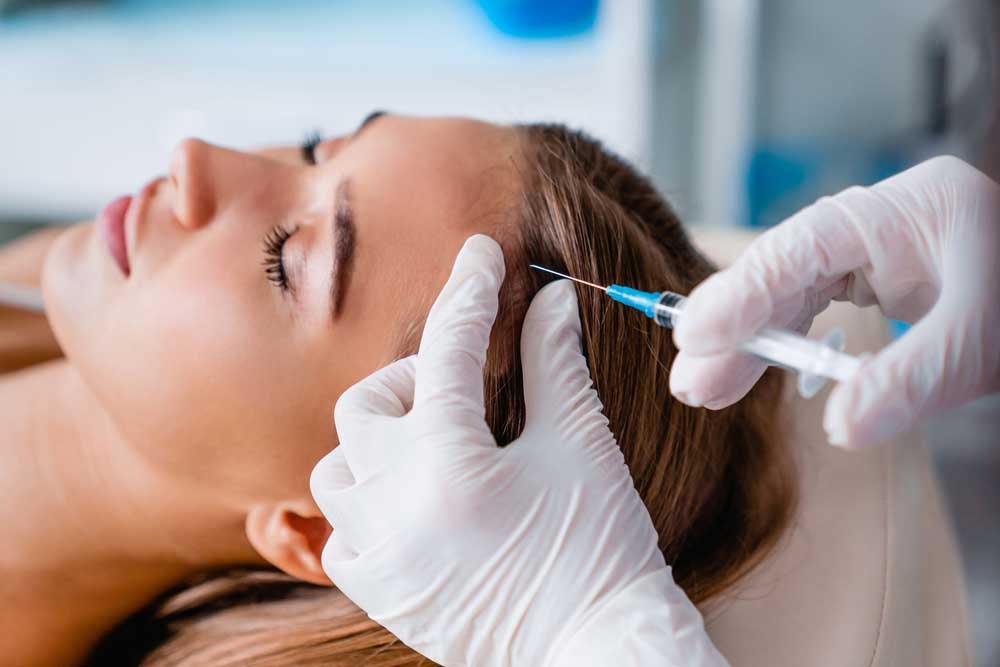
Dermatologists typically apply exosomes through minimally invasive techniques designed to deliver regenerative signals directly to hair follicles. The most common method is microinjections into targeted areas of the scalp, ensuring deep penetration and effective absorption.
Application process includes:
- Cleansing and numbing the scalp area
- Using fine needles or microneedling devices
- Injecting or infusing exosomes into affected zones
- Ensuring even distribution across thinning areas
- Completing treatment within a short clinical session
The procedure is generally quick and well-tolerated.
How Exosomes Stimulate Hair Follicles:
Exosomes work by activating dormant or weakened hair follicles and improving the scalp’s biological environment. They deliver growth factors that support regeneration and reduce inflammation, which are key contributors to hair loss progression.
Key mechanisms include:
- Reactivating inactive follicle stem cells
- Reducing inflammation in the scalp
- Enhancing blood circulation to hair roots
- Improving nutrient delivery to follicles
- Supporting keratin production for stronger hair
These actions help restore natural hair growth cycles.
Why Dermatologists Prefer Exosome Therapy:
Many dermatologists prefer exosome therapy because it offers a regenerative, non-surgical solution with promising clinical outcomes. It bridges the gap between traditional treatments and advanced regenerative medicine.
Key advantages include:
- Minimally invasive procedure
- Low risk of systemic side effects
- Natural stimulation of hair growth
- Compatibility with other treatments
- Suitable for early and moderate hair loss
This makes it a versatile option in dermatological practice.
Exosome Therapy vs Traditional Dermatology Treatments:
Traditional treatments such as minoxidil, finasteride, and PRP therapy are still widely used in dermatology. However, exosome therapy provides a more advanced biological approach by directly influencing cellular repair mechanisms.
Comparison points:
- Medications: Require long-term use and may cause side effects
- PRP: Uses patient’s blood but varies in effectiveness
- Exosomes: Provide concentrated regenerative signals
- Hair transplants: Surgical and invasive solution
- Exosome therapy: Non-surgical and regenerative
Dermatologists often use a combination approach for best results.
Who Is an Ideal Candidate for Treatment:
Dermatologists typically recommend exosome therapy for patients in the early to moderate stages of hair loss. It is most effective when hair follicles are still active but weakened.
Ideal candidates include:
- Patients with androgenic alopecia
- Individuals experiencing diffuse thinning
- Those with stress-related hair shedding
- Patients seeking non-surgical options
- Individuals with early follicle miniaturization
Severe baldness cases may require additional interventions.
Expected Results According to Dermatologists:
Results from exosome therapy are gradual and depend on individual response. Dermatologists often observe improvements over several months as follicles respond to regenerative signals.
Common outcomes include:
- Reduced hair shedding
- Improved hair thickness
- Healthier scalp condition
- Gradual increase in hair density
- Stronger hair strands over time
Consistency and follow-up treatments enhance results.
Safety and Clinical Considerations:
Dermatologists consider exosome therapy safe when performed in controlled clinical environments using properly processed biological materials. Since it is minimally invasive, it carries fewer risks compared to surgical procedures.
Possible mild side effects include:
- Temporary redness or swelling
- Mild scalp sensitivity
- Slight irritation at injection sites
- Short-term shedding phase in some cases
These effects are typically temporary and resolve quickly.
Combination Treatments in Dermatology:
Many dermatologists combine exosome therapy with other treatments to enhance results. This multimodal approach helps target hair loss from multiple angles, improving overall effectiveness.
Common combinations include:
- Exosomes + microneedling
- Exosomes + PRP therapy
- Exosomes + topical medications
- Exosomes + low-level laser therapy
These combinations can accelerate and strengthen outcomes.
Future of Dermatological Hair Restoration:
The future of hair restoration in dermatology is moving toward regenerative and personalized medicine. Exosome therapy is expected to play a central role as research advances and clinical protocols become more refined. Innovations in delivery systems and combination therapies may further improve effectiveness.
Final Thoughts:
Dermatologists are increasingly turning to exosome-based treatments as a promising solution for hair loss due to their regenerative potential and minimally invasive nature. By enhancing follicle repair and stimulating natural growth, Exosomes for Hair Regrowth are becoming an important part of modern dermatological practice. As research continues, this therapy is expected to play an even larger role in the future of hair restoration.

 English