


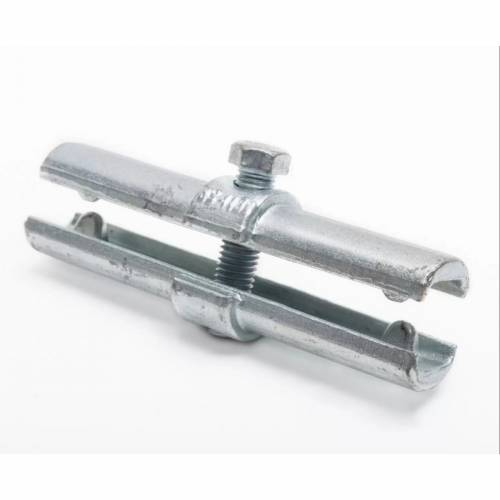
In the construction industry, the strength and stability of scaffolding systems depend heavily on the quality of their connecting components. Among these, the Joint Pin plays a vital role in ensuring secure and aligned connections between scaffold tubes. Though small in size, this component is essential for maintaining structural integrity, especially in projects that require vertical extensions and precise alignment.
Joint pins are widely used in residential, commercial, and industrial construction projects where scaffolding systems must remain stable under heavy loads and continuous use. Their simple design and high functionality make them an indispensable part of modern scaffolding setups.
What Is a Joint Pin?
A joint pin is a cylindrical metal connector used to join two scaffold tubes end-to-end. It is inserted into the hollow ends of the tubes to create a firm and aligned connection. This helps extend the height or length of scaffolding structures without compromising strength or stability.
Typically made from high-quality steel, joint pins are designed to withstand heavy loads and harsh construction conditions. Their precise dimensions ensure a snug fit, which minimizes movement between connected tubes.
Importance of Joint Pins in Construction
Joint pins are essential for maintaining the structural integrity of scaffolding systems. In construction projects, scaffolding often needs to be extended vertically to reach greater heights. Joint pins make this possible by securely connecting multiple tubes.
They help ensure proper alignment, which is critical for load distribution and overall stability. Without strong connections, scaffolding structures may become weak or unstable, increasing the risk of accidents.
Additionally, joint pins contribute to faster assembly and dismantling of scaffolding systems, improving efficiency on construction sites.
Key Features of High-Quality Joint Pins
High Strength Material
Joint pins are made from durable steel that offers excellent load-bearing capacity and resistance to bending or deformation.
Precise Fit
Accurate manufacturing ensures a tight fit within scaffold tubes, providing stable and secure connections.
Corrosion Resistance
Many joint pins are treated with protective coatings to prevent rust and extend their lifespan in outdoor environments.
Easy Installation
Their simple design allows for quick insertion and removal, saving time and labor during scaffolding setup.
Reusability
Joint pins can be reused multiple times, making them a cost-effective choice for construction projects.
Types of Joint Pins
Standard Joint Pins
Used in regular scaffolding systems, these pins provide reliable connections for general construction work.
Spigot Joint Pins
These pins include an extended portion for better grip and alignment, ensuring stronger connections between tubes.
Heavy-Duty Joint Pins
Designed for high-load applications, these pins are used in large infrastructure projects where additional strength is required.
Locking Joint Pins
These pins come with locking mechanisms to prevent accidental disconnection, enhancing safety in high-risk environments.
Applications of Joint Pins
Joint pins are widely used in various construction applications. They are commonly used in scaffolding systems for building construction, bridge work, industrial maintenance, and repair projects.
They are especially useful in high-rise construction where scaffolding structures need to be extended vertically. Their ability to provide secure and aligned connections makes them suitable for both temporary and long-term scaffolding setups.
Benefits of Using Joint Pins
One of the major benefits of joint pins is improved structural stability. They ensure that scaffold tubes remain firmly connected, reducing the risk of movement or collapse.
They also enhance safety by providing reliable connections that can withstand heavy loads and continuous use. This is particularly important in construction environments where worker safety is a top priority.
Another key benefit is efficiency. Joint pins allow for quick assembly and dismantling, saving time and reducing labor costs.
Their reusability adds to their cost-effectiveness, making them a practical choice for contractors handling multiple projects.
Installation and Maintenance
Proper installation of joint pins is essential for ensuring maximum safety and performance. The pin should be inserted fully into the scaffold tubes and checked for a secure fit before use.
Regular inspections should be carried out to identify any signs of wear, bending, or corrosion. Damaged pins should be replaced immediately to avoid potential risks.
Proper cleaning and storage after use help maintain their quality and extend their lifespan.
Why Choose Winntus Formwork Private Limited?
In construction, the reliability of scaffolding components directly impacts project safety and efficiency. Winntus Formwork Private Limited offers high-quality scaffolding accessories designed to meet the demands of modern construction.
The company focuses on precision engineering, durable materials, and strict quality control to ensure consistent performance. Their products are trusted by builders and contractors for delivering strength, safety, and long-term reliability.
Conclusion
The joint pin is a small yet essential component that plays a critical role in maintaining the strength and stability of scaffolding systems. Its ability to provide secure connections and accurate alignment makes it indispensable in construction projects.
By improving safety, efficiency, and structural integrity, joint pins contribute significantly to successful construction outcomes. Investing in high-quality joint pins ensures reliable performance and long-term benefits for every project.

 English