


The global Canned Vegetable market was valued at USD 26.4 billion in 2023 and is projected to reach USD 38.6 billion by 2032, expanding at a CAGR of 4.7% from 2024 to 2032. The market stood at USD 25.1 billion in 2022, reflecting a year-over-year (YoY) growth of 5.2% in 2023. Increasing global food demand, with over 8.1 billion population in 2023, has significantly accelerated consumption of long shelf-life food products.
Between 2018 and 2023, the Canned Vegetable market grew from USD 21.8 billion to USD 26.4 billion, registering a 21.1% cumulative increase. In 2020, the market saw a notable spike of 9.6% YoY due to panic buying and stockpiling during global disruptions. Demand remained elevated in 2021, with an additional 6.3% growth.
Rising Demand for Shelf-Stable Foods Boosts Market Growth
Global consumption of shelf-stable foods increased by 18.7% between 2019 and 2023, directly influencing the Canned Vegetable market. In North America, 72% of households purchased canned vegetables regularly in 2023, compared to 66% in 2019. Europe reported a 4.1% YoY increase in canned food consumption in 2023.
Asia-Pacific is witnessing rapid expansion, with the Canned Vegetable market growing at a CAGR of 5.8%. China and India recorded consumption growth rates of 7.3% and 6.9% respectively in 2023. Rising urbanization, which reached 51% in Asia in 2023, is driving demand for convenient food options.
Product Segmentation and Volume Analysis
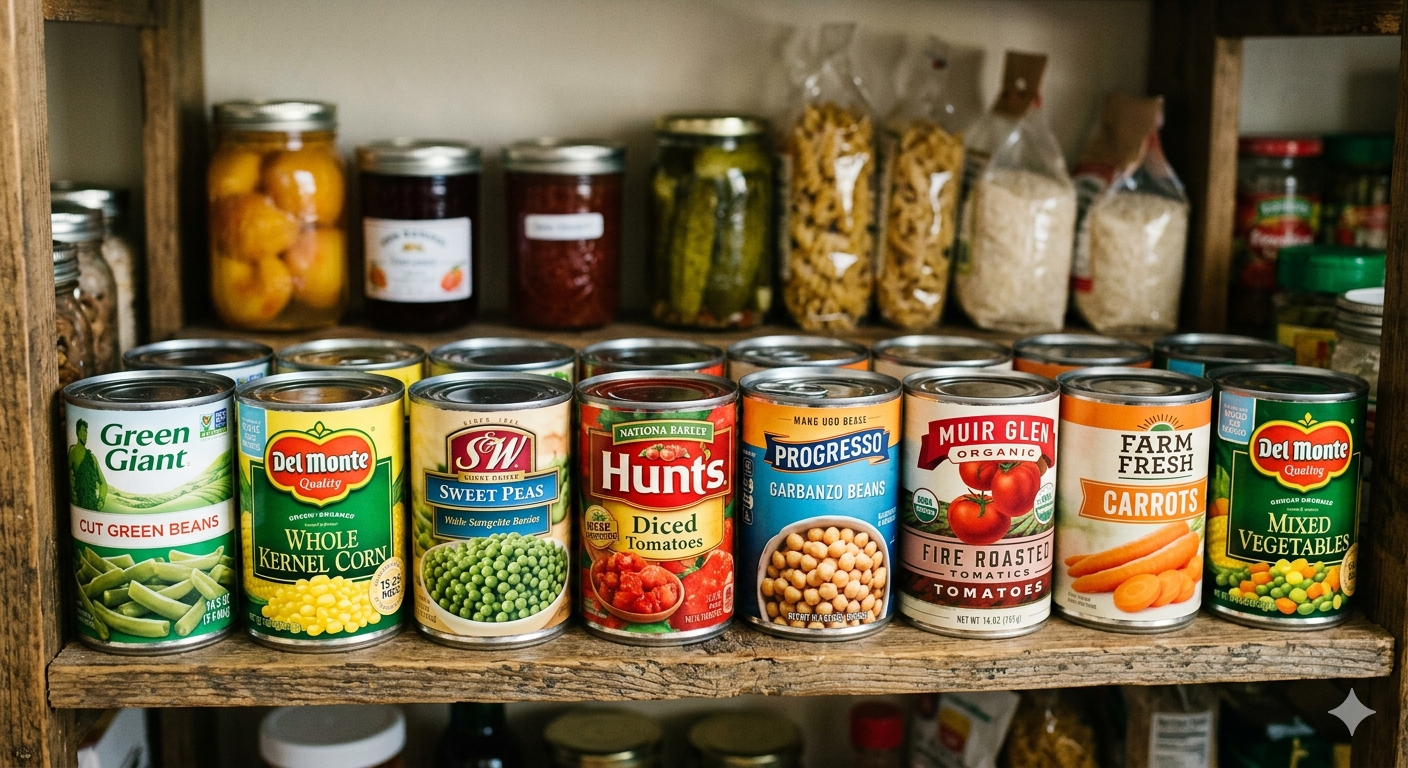
The Canned Vegetable market includes tomatoes, peas, corn, beans, mushrooms, and mixed vegetables. Tomatoes dominated the segment with a 29% market share in 2023, followed by corn at 21% and beans at 18%. Global production of canned tomatoes exceeded 12.5 million metric tons in 2023, marking a 3.8% increase from 2022.
Organic canned vegetables are gaining momentum, growing at a CAGR of 6.5%, compared to the overall market rate of 4.7%. In 2023, organic variants generated USD 4.2 billion in revenue, up from USD 3.1 billion in 2020, reflecting a 35.4% increase over three years.
Distribution Channel Insights with Sales Data
Supermarkets and hypermarkets accounted for 49% of global Canned Vegetable sales in 2023, followed by convenience stores at 19% and online retail at 17%. E-commerce sales increased by 14.2% YoY in 2023, compared to 11.5% in 2022.
Bulk purchasing through wholesale channels contributed USD 6.8 billion in revenue in 2023, showing a 4.6% YoY growth. Direct-to-consumer models expanded by 12.7% annually, supported by subscription-based grocery services that grew by 16% between 2021 and 2023.
Regional Market Breakdown and Growth Statistics
North America led the Canned Vegetable market with a 35% share in 2023, generating USD 9.2 billion in revenue. The U.S. accounted for USD 7.4 billion, growing at 4.3% YoY. Per capita consumption reached 18.6 kg annually in the region.
Europe held a 27% market share, valued at USD 7.1 billion in 2023. Germany, France, and the UK contributed 58% of regional demand. The region recorded a CAGR of 3.9% from 2018 to 2023.
Asia-Pacific accounted for 25% of the global market, up from 21% in 2018, generating USD 6.6 billion in 2023. The region added USD 2.1 billion in incremental revenue over five years, driven by population growth exceeding 4.6 billion.
Latin America and Middle East & Africa collectively contributed 13%, with Brazil and Saudi Arabia showing CAGR growth rates of 5.2% and 4.8% respectively.
Consumer Behavior and Market Trends with Statistics
A 2023 global survey indicated that 54% of consumers prefer canned vegetables for their convenience, compared to 47% in 2020. Additionally, 39% of consumers cited affordability as the primary factor influencing purchase decisions.
Health awareness is reshaping demand, with 31% of new product launches in 2023 labeled as low-sodium or preservative-free. Vegan and plant-based consumption trends drove a 12% increase in demand for canned legumes between 2022 and 2023.
Private label brands captured 22% of the Canned Vegetable market in 2023, up from 17% in 2018. Price sensitivity increased as global food inflation averaged 7.4% in 2023, encouraging consumers to shift toward cost-effective options.
Competitive Landscape and Industry Investments
The top five companies in the Canned Vegetable market held approximately 49% market share in 2023. Leading manufacturers reported revenue growth between 3.5% and 6.2% annually over the past three years.
One major producer recorded USD 2.1 billion in canned vegetable revenue in 2023, marking a 5.1% increase from 2022. Another company invested USD 280 million in production capacity expansion and automation between 2021 and 2023, increasing output efficiency by 15%.
Mergers and acquisitions increased by 9% YoY in 2023, with 11 notable deals across the food processing sector. Investments in sustainable packaging rose by 18%, with over USD 600 million allocated globally.
Government Support and Agricultural Investments
Government initiatives are supporting the Canned Vegetable market through agricultural subsidies and food processing programs. In 2023, India allocated USD 1.4 billion to food processing and cold chain infrastructure, enhancing supply chain efficiency by 12%.
The U.S. government invested USD 950 million in agricultural modernization programs, benefiting vegetable production and processing industries. The European Union allocated over USD 1.1 billion toward sustainable agriculture, with 14% directed to vegetable processing technologies.
These initiatives are expected to increase production capacity by 10–14% globally by 2028, ensuring stable raw material supply for the Canned Vegetable industry.
Future Outlook and Market Forecasts
The Canned Vegetable market is expected to grow from USD 27.6 billion in 2024 to USD 38.6 billion by 2032, adding USD 11 billion in incremental revenue. Year-over-year growth is projected to range between 4.3% and 5.1% throughout the forecast period.
Online retail is anticipated to account for 24% of total market revenue by 2030, up from 17% in 2023. Organic canned vegetables are projected to exceed USD 7.8 billion by 2032, nearly doubling from 2023 levels.
Asia-Pacific is expected to contribute 36% of total incremental growth, while North America will remain dominant, with revenues surpassing USD 12.5 billion by 2032.
Conclusion: Strong Growth Backed by Demand Stability and Investment
The Canned Vegetable market shows steady expansion, growing from USD 21.8 billion in 2018 to a projected USD 38.6 billion by 2032 at a CAGR of 4.7%. Key growth drivers include an 18.7% rise in shelf-stable food consumption, 14.2% growth in e-commerce sales, and 6.5% CAGR in organic products.
Regional growth, particularly in Asia-Pacific, combined with government investments exceeding USD 1 billion annually, strengthens long-term prospects. Increasing production volumes, expanding distribution channels, and rising consumer demand for convenience ensure sustained market momentum.
Read Full Research Study: https://marketintelo.com/report/canned-vegetable-market

 English