


In today’s rapidly expanding power distribution networks, utilities and EPC contractors are constantly searching for solutions that improve safety, reduce losses, and optimize installation efficiency. One technology that has transformed overhead distribution systems worldwide is the aerial bundle cable (ABC).
For engineers, procurement managers, and project developers, choosing the right cable system can significantly impact long-term operational reliability and cost efficiency. In this guide, we explore how aerial bundle cables work, their advantages, applications, and why HNBF Power is a trusted partner for high-performance cable solutions.
What is an Aerial Bundle Cable?
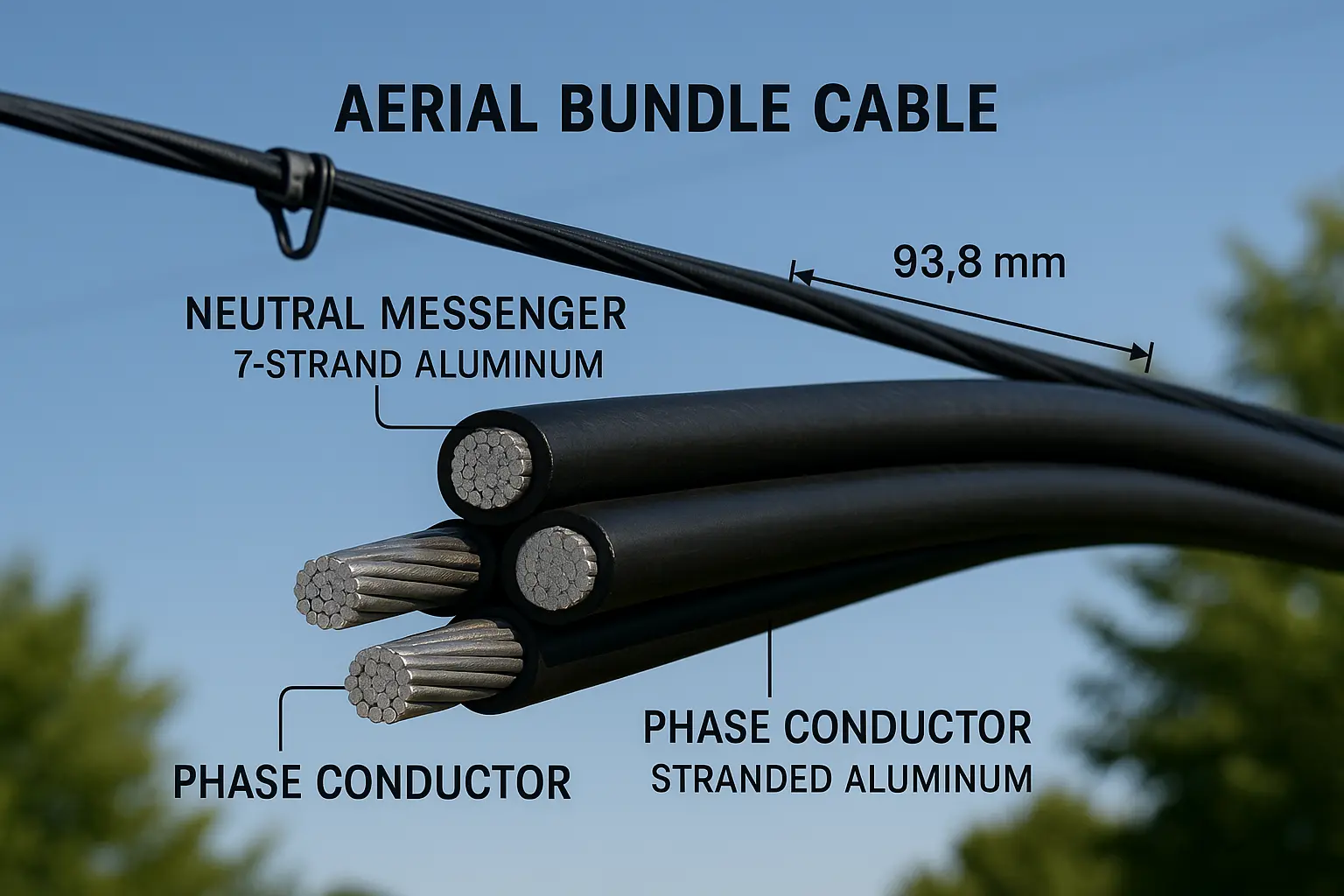
An aerial bundle cable (ABC) is a type of overhead power line that uses multiple insulated conductors bundled tightly together. Typically, it consists of:
-
One or more phase conductors
-
A neutral messenger wire (often supporting the cable mechanically)
-
XLPE or PE insulation for each conductor
Unlike traditional bare conductors, ABC systems are fully insulated, making them safer and more reliable in challenging environments.
Why Traditional Overhead Conductors Fall Short
Conventional bare conductors such as AAC, AAAC, or ACSR have been widely used for decades. However, they come with several limitations:
1. Safety Risks
Bare conductors are exposed, increasing the risk of electric shocks, especially in densely populated or urban areas.
2. Frequent Faults
Tree contact, wind, and environmental factors often cause short circuits and outages.
3. High Maintenance Costs
Regular trimming of vegetation and maintenance inspections add to operational expenses.
4. Power Theft Issues
In some regions, unauthorized tapping is a major concern with exposed conductors.
Key Advantages of Aerial Bundle Cable
Switching to aerial bundle cable systems provides a range of technical and commercial benefits.
Enhanced Safety Performance
Insulated conductors significantly reduce the risk of accidental contact, making ABC ideal for residential zones, industrial parks, and temporary installations.
Reduced Power Losses and Theft
The insulated design minimizes illegal connections and leakage currents, ensuring better energy efficiency and revenue protection.
Lower Installation Costs
ABC systems require fewer supporting structures and can be installed closer to buildings, reducing right-of-way constraints and infrastructure costs.
High Reliability in Harsh Conditions
Aerial bundle cables perform exceptionally well in environments with heavy vegetation, coastal regions, and extreme weather conditions.
Minimal Maintenance Requirements
Because of their insulated structure, ABC systems reduce the need for frequent maintenance, lowering long-term operational costs.
Applications of Aerial Bundle Cable
Aerial bundle cables are widely used across various sectors due to their versatility:
Urban and Residential Distribution
ABC is ideal for cities where space is limited and safety is a priority.
Rural Electrification Projects
In remote areas, ABC reduces outages caused by trees and wildlife, ensuring stable power delivery.
Industrial and Commercial Zones
Factories and warehouses benefit from improved reliability and reduced downtime.
Temporary Power Installations
Construction sites, events, and emergency setups often rely on ABC for quick and safe deployment.
Technical Features Engineers Should Consider
When selecting aerial bundle cable, engineers and procurement teams should evaluate the following parameters:
Conductor Material
-
Aluminum (AAC/AAAC) for lightweight and cost efficiency
-
Aluminum with steel reinforcement (ACSR-based ABC) for added strength
Insulation Type
-
XLPE insulation for higher thermal resistance and durability
-
UV-resistant materials for outdoor applications
Voltage Rating
ABC is commonly used in low-voltage (LV) and medium-voltage (MV) distribution systems.
Mechanical Strength
The neutral messenger wire must support the cable under varying environmental loads, including wind and ice.
Why Choose HNBF Power for Aerial Bundle Cable?
When sourcing aerial bundle cables for critical infrastructure projects, quality, compliance, and customization are essential. HNBF Power stands out as a reliable global manufacturer offering:
Comprehensive Product Range
From AAC and AAAC to ACSR and ABC systems, HNBF Power provides complete overhead conductor solutions tailored to diverse project needs.
International Standards Compliance
Products are manufactured according to IEC, ASTM, and BS standards, ensuring compatibility with global utility requirements.
Custom Engineering Support
HNBF Power works closely with engineers and procurement teams to design cables that match specific load, environmental, and installation conditions.
Advanced Manufacturing Capabilities
With modern production facilities and strict quality control processes, the company ensures consistent performance and durability.
Reliable Global Supply Chain
Timely delivery and scalable production capacity make HNBF Power a dependable partner for large-scale utility and EPC projects.
How Aerial Bundle Cable Solves Real-World Challenges
For utilities facing frequent outages, safety concerns, and rising maintenance costs, ABC provides a practical and proven solution.
-
Urban utilities reduce accident risks and improve public safety
-
Rural electrification projects achieve stable power delivery with minimal infrastructure
-
Industrial users benefit from fewer disruptions and higher productivity
-
Procurement teams gain long-term cost savings through reduced maintenance and losses
By addressing these pain points, aerial bundle cable systems offer a future-ready approach to power distribution.
FAQs About Aerial Bundle Cable
1. What is the lifespan of aerial bundle cable?
Aerial bundle cables typically have a lifespan of 25–40 years, depending on environmental conditions and installation quality.
2. Is ABC suitable for high-voltage applications?
ABC is mainly used for low and medium voltage distribution. For high-voltage transmission, other conductor types are preferred.
3. How does ABC reduce power theft?
The insulated design makes it difficult to tap into the cable illegally, significantly reducing unauthorized usage.
4. Can aerial bundle cable be used in coastal areas?
Yes, ABC performs well in corrosive environments due to its insulated and protected conductors.
5. Is installation more complex than bare conductors?
No, installation is often simpler and faster due to reduced need for spacing and insulation accessories.
Conclusion: Upgrade Your Power Distribution with Confidence
Aerial bundle cable is no longer just an alternative—it is becoming the preferred solution for modern power distribution systems. With enhanced safety, improved reliability, and lower lifecycle costs, ABC meets the evolving demands of utilities and infrastructure developers.
If you are planning a new project or upgrading an existing network, partnering with an experienced manufacturer is crucial.
Contact HNBF Power today to discuss your project requirements and get customized aerial bundle cable solutions designed for performance, safety, and long-term value.

 English