


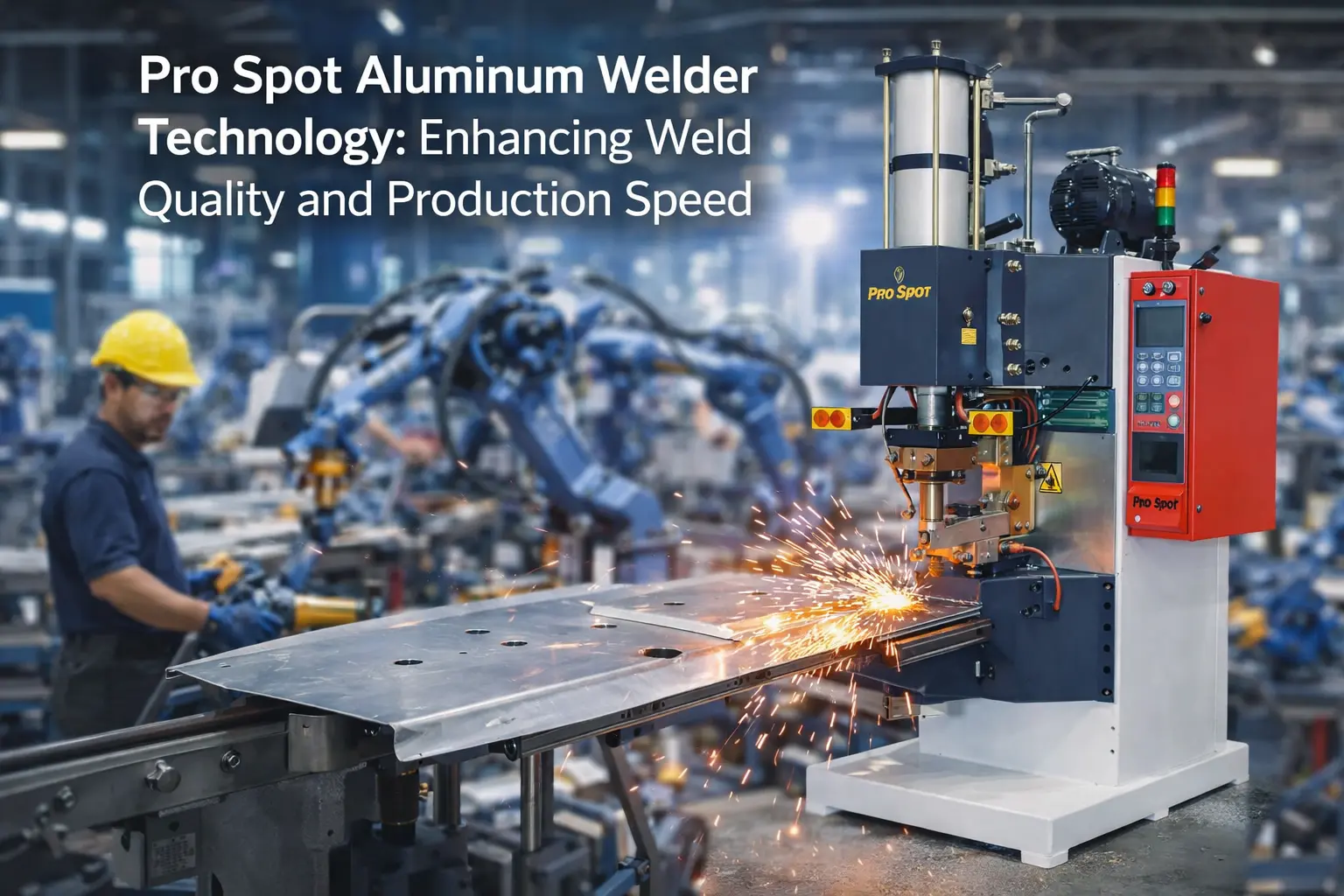
In the fast-paced world of industrial manufacturing, efficiency, precision, and repeatability are non-negotiable. For automotive, appliance, and heavy machinery production, spot resistance welding has emerged as a cornerstone technology for joining metal sheets reliably and rapidly. Heron Welder, a global leader in industrial welding and metal-joining equipment, offers advanced spot resistance welders engineered to meet the demands of modern production lines.
What is a Spot Resistance Welder?
A spot resistance welder is a type of resistance welding machine that joins metal sheets by applying heat generated from electrical resistance and mechanical pressure. The process involves positioning electrodes on either side of overlapping metal sheets. When an electric current passes through, the localized resistance at the interface produces heat, melting the metal and forming a strong weld nugget as the material cools under pressure.
Key advantages of spot resistance welding include:
-
High-speed operation for large-scale production.
-
Consistent, repeatable welds that reduce defects.
-
Minimal material distortion, maintaining sheet integrity.
-
Automation-friendly design for integration into assembly lines.
Heron’s spot resistance welders are designed with precision controllers and robust electrode systems to ensure repeatable, high-quality welds across diverse industrial applications.
Principles of Spot Resistance Welding
Understanding the principles behind spot resistance welding helps manufacturers optimize their processes. The technique relies on three main factors:
-
Current Density – The amount of electric current applied, which determines the heat generated.
-
Electrode Pressure – Proper force ensures the molten metal forms a solid weld without expelling material.
-
Weld Time – Duration of current flow is critical; too short results in weak welds, too long can burn through the material.
Heron spot resistance welders feature precise MFDC (Medium-Frequency Direct Current) and capacitor discharge controls to adjust these parameters automatically, reducing operator error and improving weld consistency.
Common Applications
Spot resistance welding is widely used across industries where sheet metal assembly is critical. Common applications include:
-
Automotive Manufacturing – Car bodies, battery packs, and chassis components.
-
Appliance Production – Refrigerators, washing machines, and HVAC components.
-
Metal Furniture & Cabinetry – Steel frame assembly and structural panels.
-
Electrical Enclosures – Junction boxes and transformers requiring precise metal joins.
By integrating Heron spot resistance welders into automated production lines, manufacturers can achieve high throughput while maintaining stringent quality standards.
Spot Resistance Welder vs. Other Welding Methods
When deciding on a welding solution, it’s essential to understand how spot resistance welding compares with other methods:
| Welding Method | Advantages | Limitations | Ideal Use Case |
|---|---|---|---|
| Spot Resistance Welding | Fast, repeatable, minimal distortion | Limited to thin sheets | Automotive, appliances, mass production |
| MIG Welding | Versatile, can weld thicker materials | Slower, requires shielding gas | Structural components, repairs |
| TIG Welding | High-quality, precise welds | Slow, operator skill-dependent | Aerospace, critical joints |
| Laser Welding | High precision, minimal heat input | High cost, complex setup | Automotive panels, electronics |
For high-volume sheet metal assembly, spot resistance welding remains the most cost-effective, efficient, and automation-compatible option. Heron’s range of welders includes both manual and fully automated systems, tailored for varying production scales.
Best Practices for Spot Resistance Welding
To maximize weld quality and equipment lifespan, manufacturers should follow key best practices:
-
Regular Electrode Maintenance: Worn or contaminated electrodes can reduce weld strength. Heron provides durable copper alloy electrodes designed for long service life.
-
Optimize Welding Parameters: Adjust current, pressure, and time based on material thickness and type.
-
Material Preparation: Clean, rust-free surfaces improve electrical contact and weld integrity.
-
Monitor Weld Quality: Utilize Heron’s advanced controllers for real-time monitoring, including nugget size and weld consistency.
-
Integrate Automation: For high-volume lines, automated loading and positioning improve throughput and reduce labor costs.
By adhering to these guidelines, manufacturers can ensure reliable, repeatable, and high-strength welds for every production cycle.
Why Choose Heron Spot Resistance Welders?
Heron Welder is recognized worldwide for delivering industrial-grade welding solutions that combine precision, reliability, and advanced automation capabilities. Manufacturers benefit from:
-
Customizable solutions for specific OEM or production requirements.
-
Integration-ready systems for automated assembly lines.
-
Global support network with training and maintenance services.
-
Wide range of models, including MFDC, capacitor discharge, and traditional AC spot welders.
Whether upgrading an existing line or designing a new production cell, Heron offers solutions that maximize productivity and minimize operational costs.
FAQs
Q1: What thickness of metal can a spot resistance welder handle?
A: Most Heron spot resistance welders can efficiently join metal sheets ranging from 0.3 mm up to 6 mm, depending on material type and electrode configuration.
Q2: Can spot welding be automated?
A: Yes. Heron provides fully automated spot resistance welding systems with robotic arms and integrated controllers for high-volume production.
Q3: How does MFDC improve weld quality?
A: Medium-Frequency Direct Current (MFDC) allows precise control over current, reducing energy consumption and producing consistent weld nuggets even on thin or coated materials.
Q4: How do I maintain electrode life?
A: Regular cleaning, reshaping, and replacement when worn ensures optimal performance. Heron electrodes are engineered for durability and easy maintenance.
Q5: Is spot welding suitable for dissimilar metals?
A: Spot resistance welding can join some dissimilar metals, but parameter adjustments and electrode selection are critical for reliable results. Heron experts can advise on optimal setups.
Elevate Your Production with Heron Spot Resistance Welders
For manufacturing engineers, OEMs, and automation integrators seeking reliable, efficient, and precise welding solutions, Heron spot resistance welders deliver unmatched performance. From single-station manual welders to fully automated production lines, Heron supports your factory’s productivity goals while ensuring top-tier weld quality.
Contact Heron today to request a quote or consult with our experts for customized spot resistance welding solutions tailored to your production needs.

 English