


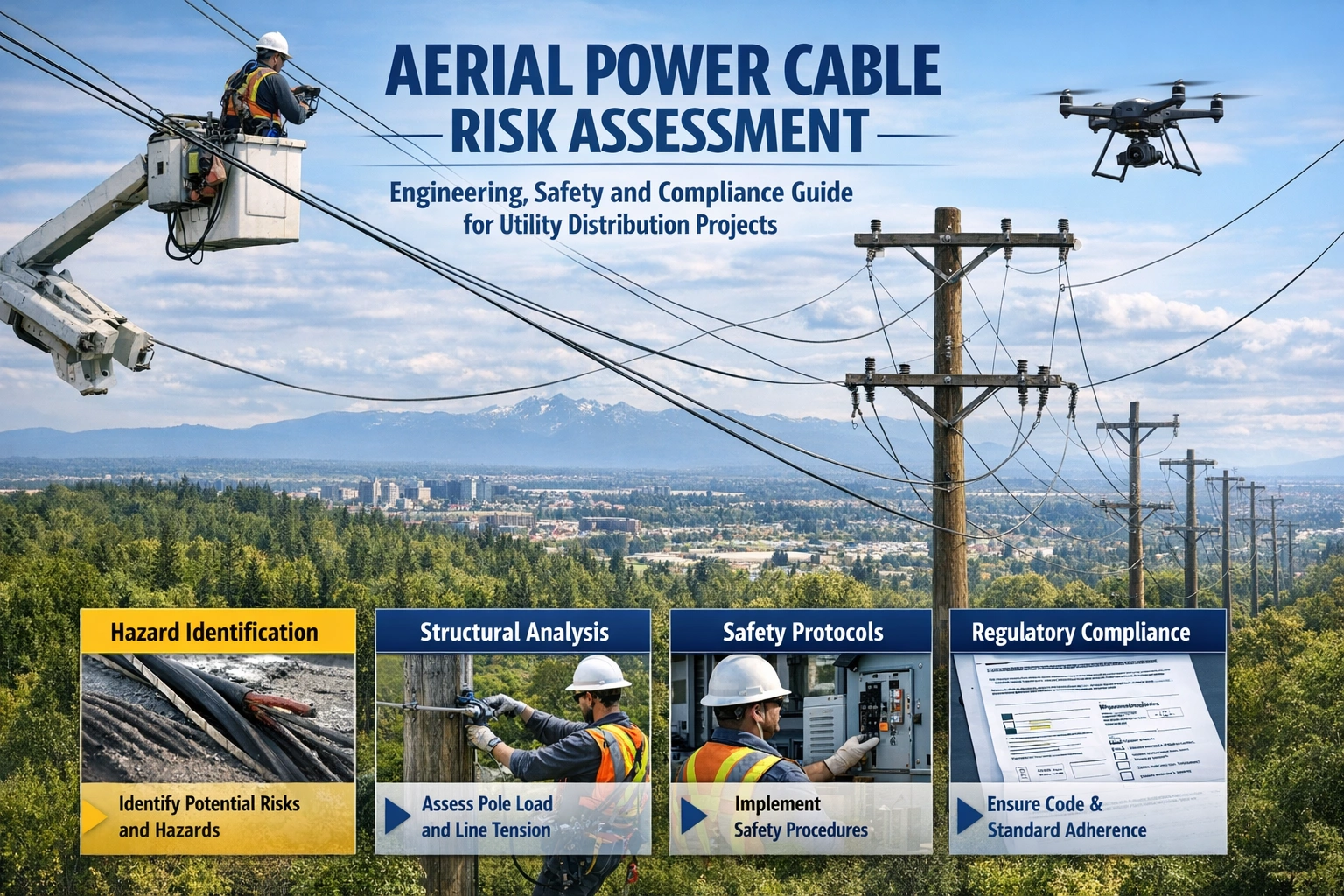
In modern power transmission and distribution networks, aerial power cable systems play a critical role in delivering electricity safely and efficiently across cities, industrial zones, and rural areas. With the growing demand for reliable electrical infrastructure, utilities and EPC contractors are increasingly turning to advanced overhead cable solutions that combine durability, efficiency, and cost-effectiveness.
For engineers, project developers, and procurement professionals, understanding the design, benefits, and applications of aerial power cables is essential for selecting the right solution for grid expansion and power distribution projects.
As a global manufacturer of overhead conductors and power cables, HNBF Power provides high-quality aerial cable solutions designed to meet international standards and the performance requirements of modern utility networks.
What Is an Aerial Power Cable?
An aerial power cable is an electrical cable installed above ground and supported by poles or towers to transmit or distribute electricity. Unlike underground cables that require trenching and complex installation, aerial cables are suspended in the air, making them a practical and economical solution for many power infrastructure projects.
Aerial power cable systems typically include:
-
AAC (All Aluminum Conductor)
-
AAAC (All Aluminum Alloy Conductor)
-
ACSR (Aluminum Conductor Steel Reinforced)
-
ABC (Aerial Bundled Cable)
-
Low Voltage Power Cable
-
Concentric Cable
These cables are engineered to withstand environmental conditions such as wind, temperature fluctuations, rain, and mechanical tension while maintaining stable electrical performance.
Why Aerial Power Cables Are Widely Used in Power Distribution
Power utilities and transmission operators choose aerial power cables for several important reasons.
1. Cost-Effective Installation
One of the primary advantages of aerial power cables is the relatively low installation cost. Compared with underground cable systems, overhead installation requires less excavation, civil work, and infrastructure preparation.
This significantly reduces project costs for large-scale distribution networks and rural electrification programs.
2. Faster Deployment for Grid Expansion
Aerial cables allow power utilities to expand networks quickly. The installation process is straightforward, enabling faster construction timelines for transmission and distribution projects.
This is particularly important for developing regions where rapid electrification is required.
3. Easier Maintenance and Inspection
Because aerial cables are visible and accessible, utilities can easily perform inspections, detect faults, and carry out maintenance.
Compared with underground systems, troubleshooting overhead cables requires less time and fewer specialized tools.
4. High Mechanical Strength
Modern aerial power cables are designed to handle mechanical loads, including wind pressure, conductor tension, and environmental stress.
For example:
-
ACSR conductors provide high tensile strength due to their steel core.
-
AAAC conductors offer excellent corrosion resistance and conductivity.
These properties ensure long-term performance in harsh environments.
Types of Aerial Power Cables Used in Utility Networks
Different aerial cable types are used depending on voltage level, environmental conditions, and project requirements.
AAC – All Aluminum Conductor
AAC cables are commonly used in urban distribution networks where span lengths are shorter and mechanical stress is relatively low.
Key benefits include:
-
Excellent electrical conductivity
-
Lightweight design
-
Cost efficiency
AAC cables are widely used for overhead power lines in cities and substations.
AAAC – All Aluminum Alloy Conductor
AAAC cables are designed for better mechanical strength and corrosion resistance compared to AAC.
These cables are ideal for:
-
Coastal regions
-
Industrial environments
-
Areas with high humidity or pollution
AAAC conductors provide long service life while maintaining efficient electrical transmission.
ACSR – Aluminum Conductor Steel Reinforced
ACSR is one of the most widely used aerial conductors in high-voltage transmission lines.
It consists of:
-
Aluminum strands for electrical conductivity
-
A steel core for mechanical strength
This combination allows ACSR cables to support long spans and heavy mechanical loads, making them ideal for large transmission networks.
ABC – Aerial Bundled Cable
ABC cables are insulated conductors bundled together and typically used for low-voltage and medium-voltage distribution systems.
Advantages include:
-
Improved safety compared to bare conductors
-
Reduced power theft
-
Lower risk of short circuits from tree contact
ABC cables are commonly used in urban areas, residential neighborhoods, and rural electrification projects.
Applications of Aerial Power Cables
Aerial power cables are widely used in various sectors of the power industry.
Urban Power Distribution
Cities require reliable electrical infrastructure to support residential, commercial, and industrial power demand. Aerial cables provide an efficient solution for expanding urban distribution networks.
Rural Electrification Projects
In rural and remote regions, aerial cables are the most practical option for extending power grids due to their lower installation cost and faster deployment.
Industrial Power Supply
Manufacturing facilities, mining operations, and industrial zones often rely on aerial power cables to connect substations and distribution points.
Utility Transmission Networks
High-strength conductors such as ACSR are widely used in transmission lines that carry electricity across long distances between power plants and substations.
How to Choose the Right Aerial Power Cable
Selecting the appropriate aerial power cable requires evaluating several technical and operational factors.
Voltage Level
The cable must match the required voltage classification for the power distribution system.
Mechanical Load
Engineers must consider span length, wind load, and environmental conditions to ensure the cable can withstand mechanical stress.
Environmental Conditions
Corrosion resistance and insulation requirements depend on factors such as humidity, temperature, pollution levels, and coastal exposure.
Electrical Conductivity
High conductivity helps reduce transmission losses and improves energy efficiency across the grid.
Working with an experienced manufacturer ensures the cable specifications match project requirements and international standards.
Why Utilities Choose HNBF Power for Aerial Power Cable Solutions
HNBF Power is a trusted global manufacturer specializing in overhead conductors and power cable solutions for transmission and distribution infrastructure.
The company offers:
-
AAC, AAAC, ACSR conductors
-
Aerial bundled cables (ABC)
-
Low voltage power cables
-
Concentric cables
HNBF Power focuses on quality manufacturing, strict quality control, and reliable performance to support power utilities, EPC contractors, and infrastructure developers worldwide.
With advanced production technology and strong engineering expertise, HNBF Power ensures that every aerial power cable meets demanding industry standards and delivers long-term reliability in real-world applications.
Frequently Asked Questions (FAQs)
What is the difference between aerial power cables and underground cables?
Aerial power cables are installed above ground on poles or towers, while underground cables are buried beneath the surface. Aerial cables are generally more cost-effective and easier to maintain.
Which aerial conductor is best for long transmission spans?
ACSR conductors are commonly used for long spans because their steel core provides high tensile strength and durability.
Where are aerial bundled cables typically used?
ABC cables are widely used in residential areas, urban distribution networks, and rural electrification projects due to their safety and reliability.
Are aerial power cables safe in harsh weather conditions?
Yes. Modern aerial cables are designed to withstand wind, temperature variations, and environmental stress when installed according to proper engineering standards.
How long do aerial power cables typically last?
With proper installation and maintenance, aerial power cables can operate reliably for 30–40 years or more, depending on environmental conditions and material quality.
Power Your Grid with Reliable Aerial Cable Solutions
Choosing the right aerial power cable is essential for building efficient, durable, and cost-effective power distribution networks. High-quality overhead conductors ensure reliable electricity delivery while reducing maintenance and operational costs.
If you are planning a power transmission or distribution project, HNBF Power offers advanced aerial cable solutions tailored to your technical requirements.
Contact HNBF Power today to discuss customized overhead conductor and aerial power cable solutions for your next power infrastructure project.

 Turkish