


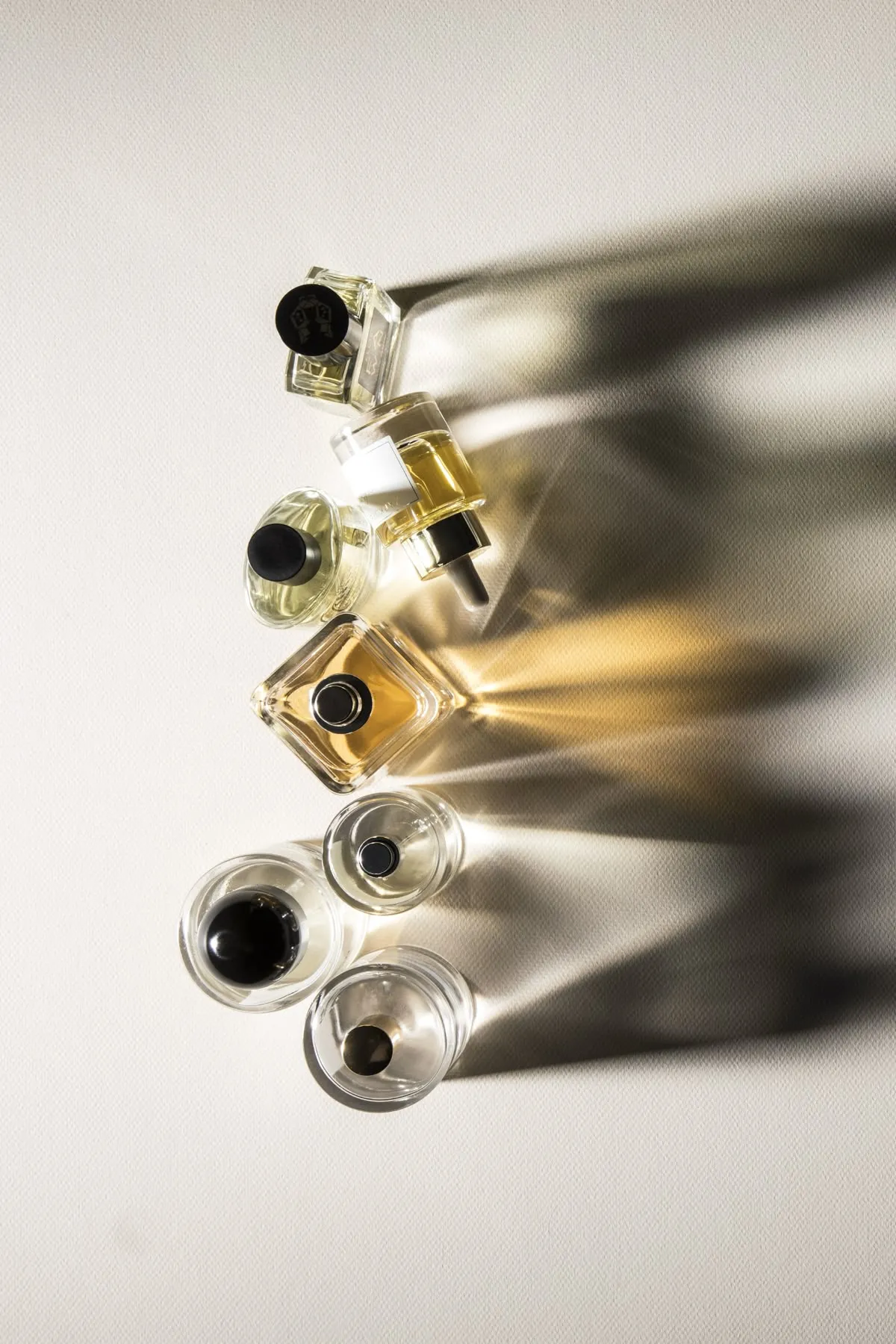
The fragrance world loves confusing people.
You walk into a store looking for something simple like a nice scent for your home or maybe a new perfume routine. Suddenly you are surrounded by words like aroma oil, fragrance oil, essential oil, perfume oil, carrier oil, diffuser oil, body oil, and possibly a small existential crisis.
At this point most people politely nod, pretend they understand everything, and leave with whatever smells nice.
But if you have ever wondered what the actual difference is between fragrance oil vs essential oil, you are not alone.
The confusion is understandable. Both types of oils smell wonderful. Both appear in perfumes, candles, skincare products, and diffusers. And both are frequently marketed as if they perform the same function.
Spoiler alert.
They do not.
Understanding the difference between fragrance oils and essential oils can help you choose the right product for perfumes, skincare routines, and even fragrance layering techniques involving body oil for perfume.
In this guide we will explore what these oils actually are, how they are created, and why some fragrance enthusiasts prefer one over the other.
And yes, we will do it without turning the explanation into a chemistry lecture.
Because scent should be enjoyable.
Not academically exhausting.
What Exactly Is an Essential Oil
Essential oils are natural aromatic compounds extracted directly from plants.

These oils capture the scent and chemical properties of flowers, leaves, bark, roots, and sometimes even fruit peels.
If you have ever smelled lavender oil or eucalyptus oil, you have already encountered essential oils.
The extraction process usually involves techniques such as steam distillation or cold pressing. These methods separate the aromatic compounds from the plant material and produce a concentrated oil that carries the plant's natural fragrance.
Common essential oils include
Lavender
Peppermint
Tea tree
Rose
Eucalyptus
Sandalwood
Each essential oil represents the natural scent profile of the plant it comes from.
Which means if a plant does not produce an aroma naturally, there is no essential oil for it.
For example, there is no essential oil that smells like ocean breeze, fresh laundry, or birthday cake.
Nature did not include those options in the plant catalog.
What Is a Fragrance Oil
While essential oils come directly from plants, fragrance oils are usually created in laboratories.
This does not automatically make them inferior, despite what certain wellness influencers might claim.
In fact, fragrance oils allow perfumers to create scents that cannot exist naturally.
A Perfume fragrance oil is typically a blend of aromatic compounds designed to produce a specific scent profile.
These compounds may include natural extracts, synthetic aroma molecules, or a combination of both.
This approach gives perfumers enormous creative freedom.
They can create scents such as
Ocean air
Vanilla cupcake
Fresh linen
Tropical fruit blends
None of these aromas exist naturally as essential oils.
Fragrance oils make them possible.
Which explains why fragrance oils dominate industries like candles, soaps, and commercial perfumes.
They offer consistency, creativity, and scent variety.
Why Perfume Oils Are Different From Both
Now things become even more interesting.
A Perfume Oil is not exactly the same as fragrance oil or essential oil.
Perfume oils are typically blends of aromatic ingredients diluted in carrier oils rather than alcohol.
These aromatic ingredients may include fragrance oils, essential oils, or both.
The result is a concentrated fragrance that sits closer to the skin and evaporates more slowly than traditional alcohol based perfumes.
Many fragrance enthusiasts prefer perfume oils because they provide longer lasting scent without aggressive projection.
In other words
people can smell you when they stand near you
not from the opposite side of a building.
Which most people consider a positive feature.
The Natural Appeal of Essential Oils
Essential oils have gained enormous popularity in wellness and aromatherapy communities.
Supporters often highlight their natural origins and potential therapeutic properties.
Lavender oil, for example, is often used for relaxation.
Peppermint oil is commonly used for mental clarity.
Tea tree oil is known for antibacterial properties.
These oils interact with the brain through scent receptors and can influence mood or relaxation.
However, essential oils are not always ideal for perfumery.
Many essential oils evaporate quickly or lack the complexity required for a full fragrance composition.
This limitation is one reason perfumers often combine them with fragrance oils when creating complex perfumes.
The Creative Freedom of Fragrance Oils
Fragrance oils exist because perfumers enjoy creativity.
Nature provides beautiful aromas, but it also has limits.
For example, there is no natural essential oil that smells exactly like cotton candy or sea breeze.
Fragrance oils allow perfumers to build imaginative scent profiles using carefully designed aroma molecules.
This is why fragrance oils dominate industries such as
candles
cosmetics
soaps
home fragrances
They provide stability and allow manufacturers to reproduce scents consistently.
Without fragrance oils, half the products in fragrance stores simply would not exist.
Which would make shopping much less entertaining.
Why Body Oils Are Often Used With Perfume
Another important place where fragrance oils appear is body care.
Many scented body products use fragrance oils rather than essential oils because they offer stronger and more consistent scent performance.
Using body oil for perfume is a popular fragrance technique because oils help perfume molecules adhere to the skin.
Moisturized skin holds fragrance longer.
Dry skin allows fragrance to evaporate quickly.
Body oils provide a hydrated surface that slows evaporation and enhances scent longevity.
When combined with perfume oils or spray perfumes, body oil layering creates a smoother fragrance experience.
Which is why fragrance enthusiasts increasingly include body oils in their routines.
The Longevity Difference Between Oils
Another major difference between essential oils and fragrance oils is longevity.
Essential oils tend to evaporate quickly because they consist of natural aromatic compounds.
Fragrance oils often contain stabilizing molecules that help the scent last longer.
This difference becomes particularly noticeable in products like candles or perfumes.
A fragrance oil candle may continue releasing scent for hours.
An essential oil candle may smell wonderful initially but fade more quickly.
This is not necessarily a disadvantage.
It simply reflects the different chemical structures involved.
The Myth That Natural Always Means Better
There is a persistent myth in the fragrance world that natural ingredients are always superior to synthetic ones.
Reality is slightly more complicated.
Essential oils can be beautiful but also unpredictable.
Their scent profiles can vary depending on climate, harvest conditions, and extraction methods.
Fragrance oils offer consistency and allow perfumers to reproduce specific scents precisely.
Many high quality perfumes actually combine both natural and synthetic ingredients to achieve balance.
In other words,
nature and chemistry work better together than either one does alone.
Which might be the most reasonable compromise the fragrance industry has ever produced.
When Essential Oils Are the Better Choice
Essential oils are ideal when you want a scent that comes directly from nature.
Because these oils are extracted from real plants, they often carry subtle aromatic complexity that reflects the natural source.
For example
Lavender essential oil has a calm herbal softness.
Rose essential oil feels delicate and romantic.
Eucalyptus oil smells fresh and invigorating.
These natural scent profiles make essential oils extremely popular in areas such as
aromatherapy
wellness routines
natural skincare
massage oils
People often use essential oils in diffusers or relaxation routines because the aromas interact with the brain’s scent receptors and can influence mood.
However, essential oils are not always perfect for long lasting fragrance.
Many natural oils evaporate quickly and do not provide the layered structure required for complex perfumes.
Which is why perfumers rarely rely on essential oils alone.
When Fragrance Oils Are the Better Option
Fragrance oils excel in situations where creativity and scent stability matter.
Unlike essential oils, fragrance oils can be designed to mimic virtually any aroma imaginable.
Want a scent that smells like ocean waves?
Fragrance oil can do that.
Want something that smells like caramel dessert?
Fragrance oil can definitely do that.
In fact, many products rely heavily on Perfume fragrance oil because it allows manufacturers to produce consistent scents across large batches.
Fragrance oils are commonly used in
candles
cosmetics
perfumes
body lotions
soaps
home fragrances
The reason is simple.
They last longer and provide more predictable scent performance.
Which makes them extremely practical for fragrance products designed for everyday use.
Why Perfume Oils Often Use Both
Now things become slightly more interesting.
Many Perfume Oil formulas actually combine fragrance oils and essential oils.
This combination allows perfumers to take advantage of both worlds.
Essential oils contribute natural aromatic complexity.
Fragrance oils provide stability and creative freedom.
When these ingredients are blended into carrier oils such as jojoba or almond oil, the result is a smooth fragrance that sits close to the skin and lasts longer than alcohol based perfumes.
This is why perfume oils have become increasingly popular among fragrance enthusiasts.
They offer longevity without overwhelming projection.
Which is perfect for people who want to smell amazing without turning every room into a fragrance cloud.
How Body Oils Fit Into the Picture
Another place where fragrance oils frequently appear is body care.
Using body oil for perfume has become a popular fragrance technique because oils help perfume molecules adhere to the skin.
When skin is moisturized, fragrance evaporates more slowly.
This means the scent lasts longer and develops more gradually.
Many body oils contain fragrance oils because they provide stronger and more consistent scent profiles than essential oils alone.
For example
a vanilla scented body oil usually relies on fragrance oil rather than vanilla essential oil.
Why?
Because pure vanilla essential oil does not actually exist in the form people expect.
Vanilla fragrance oil allows perfumers to recreate the scent accurately.
Which is good news for anyone who enjoys smelling like dessert.
The Longevity Factor
One of the biggest differences between essential oils and fragrance oils is longevity.
Essential oils are natural compounds that evaporate quickly.
Their scent may be beautiful but often fades faster.
Fragrance oils contain molecules designed to last longer.
This is why they are widely used in perfumes and scented products.
When combined with carrier oils in Perfume Oil, fragrance oils can remain detectable on the skin for hours.
This longer performance is one reason fragrance oils dominate modern perfumery.
They allow scents to evolve gradually instead of disappearing too quickly.
The Safety Considerations
Another important factor when comparing fragrance oils and essential oils is skin safety.
Essential oils are extremely concentrated and can sometimes irritate the skin if used improperly.
For example
undiluted cinnamon oil or clove oil can cause irritation.
This is why essential oils are usually diluted with carrier oils before being applied to the skin.
Fragrance oils, on the other hand, are often formulated specifically for cosmetic use and undergo testing to ensure they are safe in appropriate concentrations.
However, both types of oils should always be used according to recommended guidelines.
Because even the most beautiful scent can become unpleasant if it causes skin irritation.
The Environmental Consideration
Another interesting aspect of the fragrance oil versus essential oil debate involves sustainability.
Producing certain essential oils requires enormous quantities of plant material.
For example
it can take thousands of rose petals to produce a small amount of rose essential oil.
This makes some natural oils extremely expensive and resource intensive.
Fragrance oils provide an alternative.
By recreating scents using aromatic molecules, perfumers can reduce the demand for rare plant resources.
In some cases this approach helps protect endangered plant species.
Which means fragrance oils are not simply laboratory shortcuts.
They can actually contribute to sustainable fragrance production.
Why the Debate Continues
Despite these practical considerations, the debate between fragrance oils and essential oils continues.
Some people prefer essential oils because they value natural ingredients.
Others appreciate fragrance oils for their versatility and longevity.
In reality, both types of oils have their place in perfumery.
Essential oils provide authentic botanical aromas.
Fragrance oils provide creative possibilities and scent stability.
And when combined in products like Perfume fragrance oil, they create fragrances that balance natural beauty with modern innovation.
Which is probably the most sensible solution.
Choosing the Right Oil for Perfume
If your main goal is creating or wearing perfume, fragrance oils usually provide the best results.
A Perfume fragrance oil allows perfumers to construct layered scent profiles that evolve gradually over time.
Traditional perfumes rely on top notes, middle notes, and base notes. These layers create a fragrance journey that changes throughout the day.
Essential oils alone rarely provide this complexity.
Many essential oils evaporate quickly or lack the depth required for a full fragrance structure.
Fragrance oils, however, are designed specifically to perform well in perfume compositions.
They allow perfumers to build scents with balance, longevity, and creative variety.
This is why most commercial perfumes use fragrance oils either partially or entirely.
Nature provides inspiration.
Chemistry provides precision.
Together they create the perfumes people love.
Choosing Oils for Skincare
When it comes to skincare, the choice becomes more nuanced.
Essential oils are often used in natural skincare products because they contain plant based aromatic compounds that may offer additional benefits.
Lavender oil is commonly associated with relaxation.
Tea tree oil is frequently used for its antibacterial properties.
Chamomile oil is often used in calming skincare formulations.
However, essential oils must be diluted properly before being applied to the skin.
They are extremely concentrated and can cause irritation if used incorrectly.
Fragrance oils, on the other hand, are usually designed specifically for cosmetic products.
When formulated correctly, they provide stable scent performance in lotions, creams, and oils.
Many skincare products actually combine both types of oils to achieve the ideal balance between fragrance and skin compatibility.
How Body Oils Enhance Fragrance
One place where fragrance oils frequently appear is body care.
Using body oil for perfume has become a popular technique among fragrance enthusiasts.
Why?
Because oils help fragrance molecules adhere to the skin.
Dry skin allows perfume to evaporate quickly.
Moisturized skin holds scent molecules longer.
Body oils create a thin moisturizing layer that slows fragrance evaporation and allows the scent to develop gradually.
This is why perfume applied over body oil often lasts significantly longer than perfume applied to dry skin.
And yes, that small detail can make an expensive fragrance perform dramatically better.
Which is always welcome news.
Why Perfume Oils Are Becoming Popular Again
In recent years, perfume lovers have rediscovered the charm of Perfume Oil.
Unlike alcohol based perfumes, perfume oils use carrier oils such as jojoba or almond oil to deliver fragrance.
This changes how the scent behaves.
Perfume oils evaporate more slowly.
They sit closer to the skin.
They create a softer scent trail that develops gradually.
Many perfume oils combine fragrance oils and essential oils to achieve the perfect balance between natural aroma and lasting performance.
This hybrid approach allows perfumers to maintain artistic freedom while preserving scent longevity.
The result is a fragrance experience that feels intimate rather than overwhelming.
Which, for many people, is exactly what they want.
How Oils Behave in Different Products
Another reason understanding fragrance oil vs essential oil matters is product compatibility.
Different oils behave differently depending on how they are used.
Essential oils perform well in aromatherapy diffusers because their natural aromas disperse easily into the air.
Fragrance oils perform better in candles and soaps because they maintain scent stability when exposed to heat or chemical reactions.
Perfume oils combine aromatic ingredients with carrier oils to slow evaporation and extend longevity.
Each type of oil serves a specific role in fragrance design.
Choosing the wrong oil for the wrong product can result in disappointing performance.
Which explains why perfumers carefully select ingredients based on their intended use.
Fragrance is chemistry.
Even if we prefer to think of it as magic.
The Future of Fragrance Oils and Essential Oils
As fragrance technology advances, the line between natural and synthetic ingredients continues to evolve.
Perfumers now use advanced aroma molecules that replicate natural scents with remarkable accuracy.
Some synthetic ingredients even improve sustainability by reducing the need to harvest large quantities of plant material.
At the same time, essential oils remain highly valued for their authenticity and botanical character.
Many modern perfumes combine both approaches.
They use essential oils for natural richness and fragrance oils for stability and creative expression.
This hybrid approach allows perfumers to craft scents that are both artistic and practical.
And as fragrance science continues to advance, the possibilities for new scent combinations will only expand.
Why Understanding the Difference Matters
Understanding the difference between fragrance oils and essential oils helps you make smarter decisions when choosing scented products.
If you want natural botanical aromas for relaxation or aromatherapy, essential oils are often the better choice.
If you want long lasting perfumes or creative scent profiles, fragrance oils usually provide better performance.
If you want a fragrance that sits close to the skin and evolves gradually, a Perfume Oil may be the ideal option.
And if you want your perfume to last longer, incorporating body oil for perfume into your routine can significantly improve fragrance longevity.
These choices allow you to tailor your fragrance experience rather than relying on trial and error.
Which is helpful in an industry filled with marketing buzzwords and mysterious scent descriptions.
Final Thoughts
The debate between fragrance oil vs essential oil often becomes unnecessarily dramatic.
Some people insist natural oils are the only acceptable option.
Others argue synthetic fragrance oils are superior in every way.
The truth is far more practical.

Both types of oils serve valuable roles in the fragrance world.
Essential oils provide authentic plant based aromas.
Fragrance oils provide creative flexibility and scent longevity.
And when combined in products like Perfume fragrance oil or layered with body oil for perfume, they create fragrance experiences that are both beautiful and functional.
In the end, the best oil is not defined by marketing labels.
It is defined by how well it performs in the scent experience you want to create.
Which means the real winner in the fragrance oil versus essential oil debate is simple.
The one that smells amazing to you.

 English