


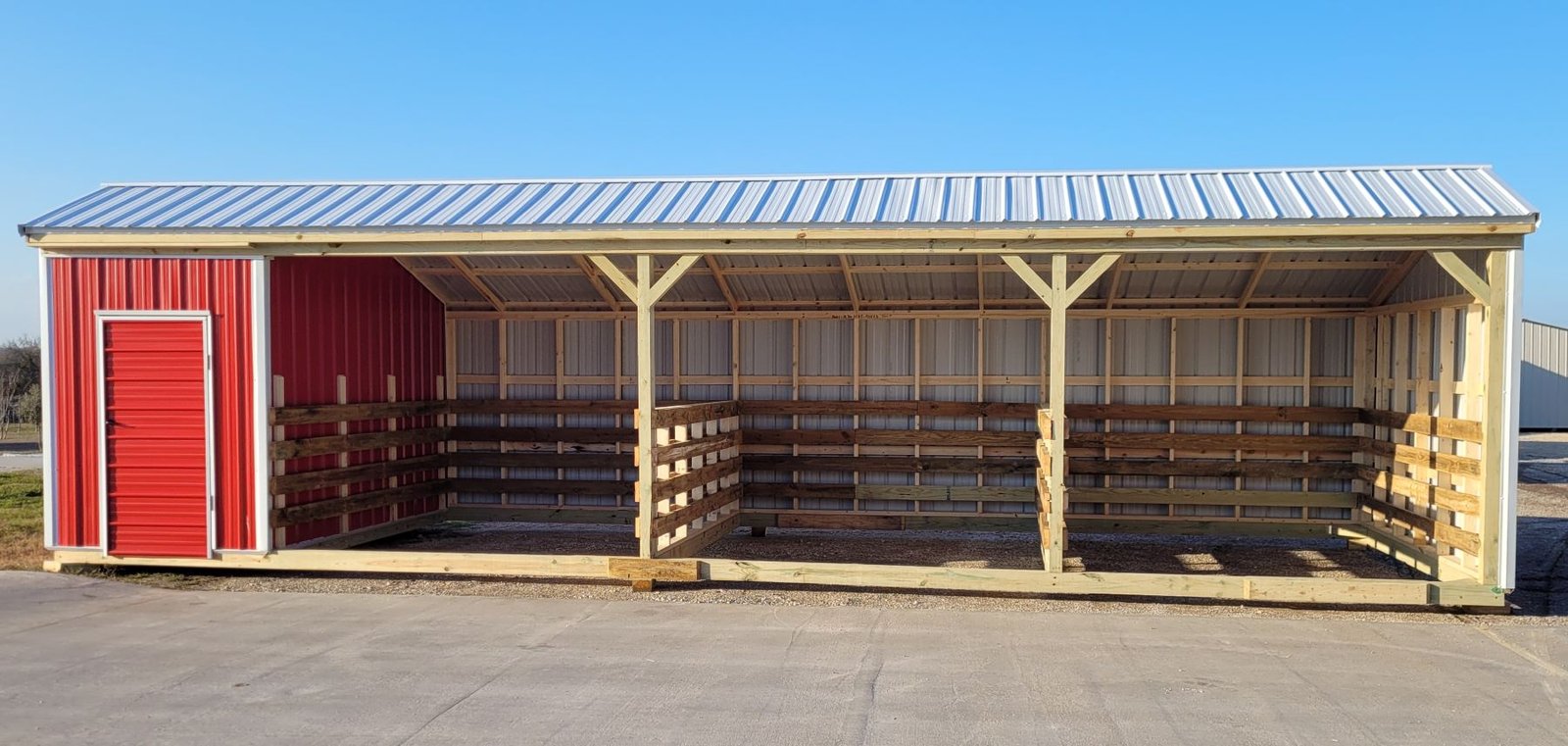
Designing and building Horse barns in Lott, Texas requires more than putting up walls and a roof. We plan for climate, land use, horse safety, storage, and long term durability. In a rural community where agriculture and livestock are part of everyday life, a well designed structure is an investment in both property value and animal health.
In this comprehensive guide, we walk through everything needed to plan efficient, durable, and functional custom horse barns for properties across Texas. From layout ideas to must-have features, we focus on practical design choices that work in Central Texas conditions.
Why Proper Planning Matters for Horse Barns
Before construction begins, we define the purpose of the building. Are we housing two recreational horses or managing a larger breeding or boarding operation? The scale determines layout, airflow needs, drainage planning, and material selection.
Well designed Horse barns:
-
Improve horse health and comfort
-
Reduce daily labor
-
Increase property functionality
-
Withstand Texas heat and storms
-
Provide long term value
Planning ahead allows us to incorporate smart storage, wide aisles, wash racks, and proper ventilation without costly changes later.
Choosing the Right Layout for Custom Horse Barns
The layout is the backbone of any successful barn. When we design custom horse barns, we tailor the floor plan to match the owner’s routine and available acreage.
Center Aisle Barn Layout
This is one of the most popular layouts in Lott and surrounding areas.
Features:
-
Stalls on both sides
-
Wide central aisle
-
Easy access to tack and feed rooms
-
Efficient daily cleaning
This layout works well for small to mid size operations and allows strong cross ventilation when doors are installed at both ends.
Shed Row Barn Design
A shed row layout is ideal for smaller properties.
Advantages:
-
Lower construction cost
-
Direct stall access to paddocks
-
Excellent natural airflow
-
Simple expansion options
For landowners with open acreage, this layout supports pasture rotation and easy turnout.
Monitor Barn Style
Monitor style Horse barns offer raised center roofs, increasing natural light and airflow.
Benefits include:
-
Improved temperature control
-
Enhanced aesthetic appeal
-
Additional loft storage
These are especially effective in hot climates where heat rises and escapes through ridge vents.
Stall Design Ideas for Comfort and Safety
Every successful barn starts with well designed stalls. When planning custom horse barns, stall size and materials must be chosen carefully.
Standard Stall Size
-
12x12 feet for average horses
-
12x14 or larger for foaling mares
-
10x12 for smaller breeds
Flooring Options
-
Compacted clay base with mats
-
Concrete with rubber mats
-
Crushed limestone for drainage
In Central Texas soil conditions, proper drainage beneath stalls prevents standing moisture and odors.
Safe Stall Features
-
Rounded edges
-
Heavy duty sliding doors
-
Chew resistant boards
-
Secure latches
Safety is not optional. It is foundational.
Ventilation and Climate Control in Texas
Heat management is essential in this region. Summer temperatures regularly climb, and proper airflow keeps horses healthy.
We incorporate:
-
Ridge vents
-
Cupolas
-
Large sliding doors
-
Operable windows
-
Insulated roofing panels
Well ventilated Horse barns reduce respiratory issues and maintain dry bedding conditions. Strategic roof pitch and eave overhangs also provide shade.
Must Have Features for Custom Horse Barns
Designing custom horse barns allows us to go beyond basic stalls. We integrate features that simplify daily operations.
Tack Room
A secure, climate controlled tack room protects saddles and equipment from humidity.
Include:
-
Saddle racks
-
Bridle hooks
-
Lockable cabinets
-
Rubber flooring
Feed Room
We separate feed storage from stalls to prevent contamination and pests.
Best practices:
-
Metal bins with sealed lids
-
Elevated shelving
-
Rodent-proof construction
Wash Rack Area
Outdoor or indoor wash bays with proper drainage reduce mud buildup.
Essential elements:
-
Non slip concrete
-
Cross ties
-
Frost free hydrants
Hay Storage Loft
Monitor style barns often include loft space for hay storage. Keeping hay dry and elevated protects feed quality.
Site Planning for Horse Barns in Lott
Location on your property matters as much as the design itself.
We evaluate:
-
Natural drainage slopes
-
Prevailing wind direction
-
Sun exposure
-
Accessibility for trailers
Placing Horse barns on slightly elevated ground prevents flooding during heavy Texas rains. Facing the barn to capture cross breezes improves natural cooling.
Materials That Withstand Texas Conditions
Durability is key in Central Texas, where wind, heat, and storms are common.
Metal Barn Structures
-
Long lifespan
-
Fire resistant
-
Low maintenance
-
Cost effective
Wood Framed Barns
-
Traditional appearance
-
Customizable finishes
-
Strong structural integrity
For many property owners, custom horse barns blend wood accents with metal framing to achieve both beauty and resilience.
Lighting and Electrical Planning
Proper lighting improves safety and extends working hours.
We include:
-
LED overhead fixtures
-
Exterior flood lights
-
GFCI outlets
-
Separate electrical panels
Natural light panels reduce energy costs and create a brighter interior environment.
Pasture Integration and Turnout Design
A barn should work seamlessly with pasture layouts.
We recommend:
-
Safe fencing (no barbed wire)
-
Wide gates for equipment
-
Separate turnout areas
-
Gravel pathways to reduce mud
Planning turnout alongside Horse barns ensures smoother daily routines and healthier horses.
Expanding Your Custom Horse Barns in the Future
Growth is common in equestrian properties. We design barns with expansion in mind.
Options include:
-
Pre-engineered frames
-
Modular stall additions
-
Extendable rooflines
-
Flexible wall partitions
Future proofing custom horse barns prevents costly redesigns.
Budget Planning Without Compromising Quality
A well built barn is an investment. While cost varies by size and materials, cutting corners on ventilation, drainage, or structural integrity leads to expensive repairs later.
We prioritize:
-
Strong foundations
-
Weather resistant siding
-
Proper insulation
-
Functional layouts
Quality Horse barns pay off through lower maintenance and higher property value.
FAQs
Q1. How many acres do we need for a horse barn?
Ideally, one to two acres per horse allows space for turnout and grazing. Proper pasture rotation supports long-term land health.
Q2. What is the best roof pitch for Texas barns?
A moderate to steep pitch improves heat escape and storm runoff.
Q3. How do we keep barns cool in summer?
Ridge vents, shade orientation, large doors, and ceiling fans all contribute to airflow.
Q4. Are custom horse barns worth the investment?
Yes. Tailored layouts improve efficiency, increase durability, and add resale value to rural properties.
Final Thoughts
A barn is more than a structure. It is the center of daily horse care. By focusing on layout, ventilation, safety, and materials, we create durable, efficient, and attractive custom horse barns that perform well in Texas weather conditions.
Thoughtful design prevents problems, supports animal health, and simplifies everyday tasks. When properly planned, Horse barns become a lasting asset for generations.

 English