


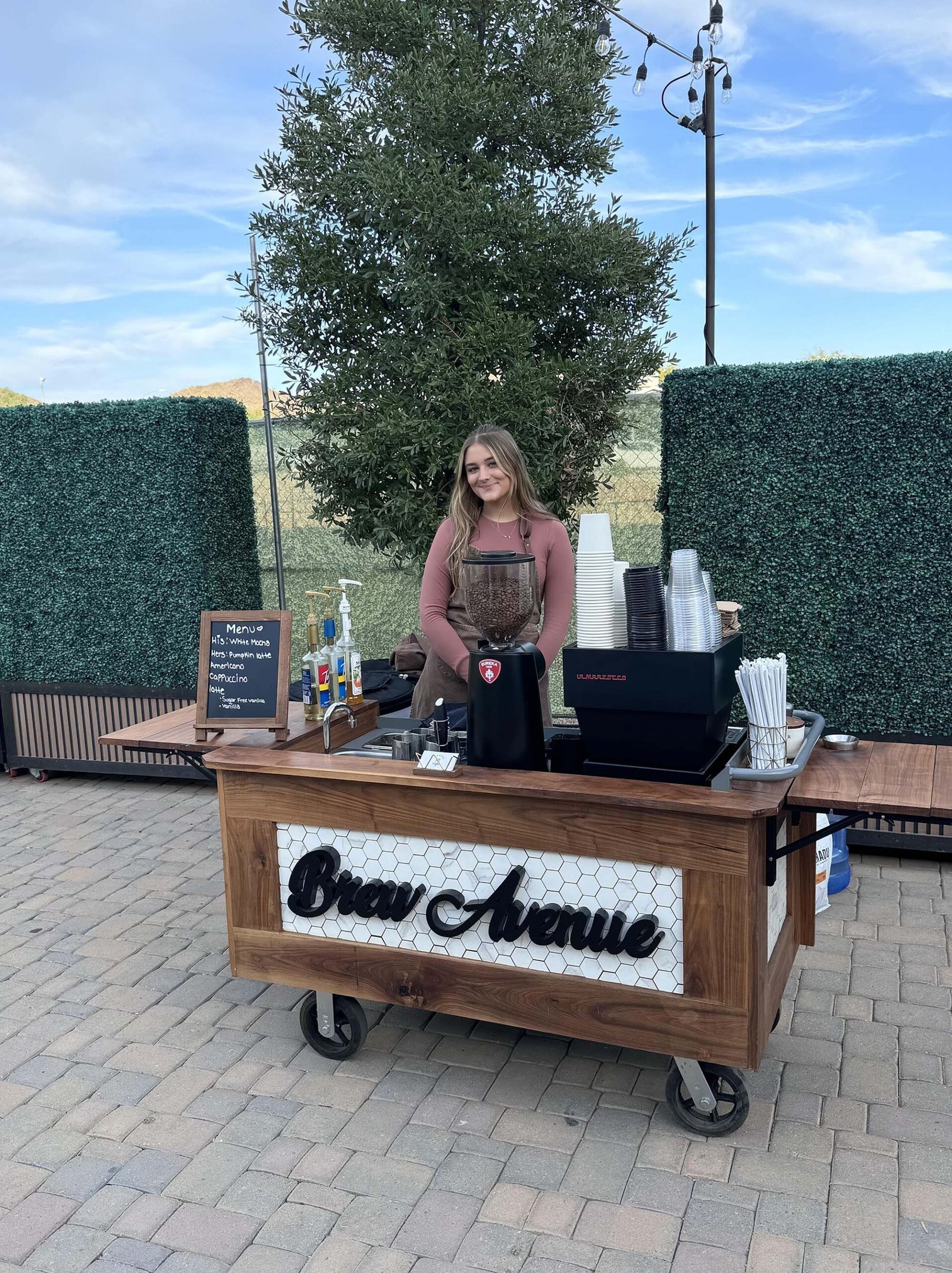
Water defines life in the Sonoran Desert. Every drop that falls from the sky or flows through the Colorado River is accounted for, fought over, cherished. In this environment, every industry must adapt—including coffee. The traditional espresso machine is surprisingly thirsty. Between flushing group heads, rinsing portafilters, and purging steam wands, a busy coffee bar can send gallons of precious water down the drain before serving a single customer. This is not sustainable in a city where water conservation is existential. A responsible coffee catering service must rethink every drop. At Brew Avenue Coffee, we are located in Phoenix, Arizona, United States, and we have engineered our mobile operation to save water one espresso shot at a time.
The Hidden Water Footprint of Coffee
Most coffee drinkers never consider the water used to prepare their drink beyond what ends up in the cup. The reality is far more complex.
Machine Maintenance: Professional espresso machines require regular flushing to maintain temperature stability. Group heads are flushed between shots to clear coffee residue and cool the brew chamber. These flushes can consume ounces of water per cycle, adding up to gallons per hour.
Cleaning Cycles: Portafilters must be rinsed between uses. Steam wands require purging after every milk drink. These cleaning steps, essential for quality and hygiene, send significant water volume to drain.
Drip Coffee Production: Traditional batch brewers often use a fixed ratio of water to grounds, with no adjustment for partial batches. Excess coffee is poured out, wasting both water and beans.
| Coffee Operation | Water Consumption |
|---|---|
| Group head flush | 2-4 ounces per cycle |
| Portafilter rinse | 4-6 ounces per use |
| Steam wand purge | 1-2 ounces per milk drink |
| Drip coffee waste | Variable, often significant |
The Desert-Adapted Solution
Our approach to water conservation operates on three levels: technology, process, and menu.
Level One: Advanced Equipment
We use espresso machines with thermoblock heating systems rather than traditional boilers. Thermoblocks heat water on demand, eliminating the need for constant temperature flushing. When the machine is idle, water is not being cycled through cooling flushes. This technology alone reduces machine-related water waste by up to 30%.
Our steam wands are equipped with anti-vacuum valves that prevent water from being drawn back into the boiler after purging. This simple addition saves ounces with every milk drink.
Level Two: Smart Processes
Technology alone is insufficient without trained operators. Our baristas follow water-conscious protocols:
-
Group heads are flushed only when necessary for temperature, not habitually
-
Portafilters are wiped clean rather than rinsed between same-bean shots
-
Steam wands are purged efficiently, with minimal water release
-
Equipment is cleaned with targeted methods that use less water
These practices, drilled through training and reinforced daily, multiply the savings from our equipment.
Level Three: Menu Design
Perhaps our most significant water-saving innovation is menu design. By featuring cold brew prominently, we eliminate the need for hot water extraction entirely. Cold brew steeps for 18-24 hours without a single drop of water beyond what ends up in the final product.
For hot beverages, we emphasize espresso-based drinks over drip coffee. Espresso uses precisely the water required for extraction—no more. Americanos add hot water to espresso, but that water is metered and controlled.
| Menu Item | Water Efficiency |
|---|---|
| Cold brew | Minimal water, no heating waste |
| Espresso | Precise extraction, no excess |
| Americano | Controlled dilution, minimal waste |
| Drip coffee | Higher potential waste |
Self-Contained Water Systems
Our mobile carts carry their own water supplies, giving us complete control over usage and waste.
Fresh Water Tanks: We arrive at your event with precisely calculated fresh water for the expected service volume. No tapping into venue supplies. No strain on local infrastructure.
Grey Water Capture: All wastewater from rinsing, flushing, and cleaning is captured in dedicated grey water tanks. Nothing is dumped on-site or into storm drains. We dispose of grey water responsibly after departure.
Closed-Loop Cleaning: For events with reusable cup service, we use minimal-water cleaning protocols. Cups are washed efficiently, with wastewater captured and removed.
The Arizona Water Context
Understanding why this matters requires understanding Arizona's water reality.
The Colorado River Crisis: The Colorado River, which supplies much of Arizona's water, is in crisis. Decades of overuse combined with climate change have reduced flows dramatically. In 2024, Arizona faced some of its toughest water cuts yet under the Drought Contingency Plan.
Groundwater Depletion: Beyond the Colorado, Arizona relies on groundwater that is being pumped faster than it can recharge. In some rural areas, wells are running dry. Suburbs are scrambling to prove they have 100-year water supplies for future development.
Agricultural Pressure: Agriculture consumes the majority of Arizona's water. As urban populations grow, competition between cities and farms intensifies. Every drop saved in one sector is a drop available for another.
Urban Conservation: Phoenix has become a national leader in urban water conservation. Per capita water use has dropped significantly over the past two decades, but the work is far from complete.
In this context, a coffee service that wastes water is not just inefficient—it is out of alignment with community values.
The Ripple Effect of Water Savings
When you choose a desert-adapted coffee service, the benefits extend far beyond your event.
Immediate Impact: Your event's water footprint is minimized. The gallons that would have been wasted through conventional service stay in the system.
Educational Value: Guests who learn about our water-conscious practices carry that awareness home. They may think twice about their own coffee habits, their landscaping choices, their daily water use.
Industry Pressure: As more clients demand water-conscious vendors, the entire catering industry adapts. Equipment manufacturers innovate. Standards rise. The cumulative effect is significant.
Real Results
Our water-saving practices produce measurable outcomes.
| Event Size | Water Saved vs. Conventional |
|---|---|
| 50 guests | 15-20 gallons |
| 100 guests | 30-40 gallons |
| 200 guests | 60-80 gallons |
| 500 guests | 150-200 gallons |
These are not trivial amounts. Over a year of events, the water saved by our operation could fill swimming pools, irrigate gardens, support households.
Beyond Coffee: Holistic Water Stewardship
Our commitment to water conservation extends beyond our direct operations.
Roaster Partnerships: We work with Arizona roasters who share our values. Some roast with solar power. Some package in recyclable materials. All are local, reducing the water embedded in transportation.
Composting Connection: Our zero-waste program, which sends coffee grounds to Recycled City, also supports water conservation. Compost-enriched soil retains moisture better than degraded desert dirt, reducing irrigation needs for local farms.
Community Engagement: We support organizations working on Arizona water issues. We share their messages with our clients. We believe businesses must be advocates, not just operators.
The Guest Experience
Does water conservation affect the quality of your coffee? Not at all. Our desert-adapted methods produce espresso that rivals the best cafés anywhere.
Guests receive drinks crafted with precision, served with warmth. They may notice that we carry our own water, that we capture our waste, that we seem unusually thoughtful about the details. If they ask, we explain. If they don't, they simply enjoy.
Conclusion: Every Drop Counts
In the Sonoran Desert, water is life. It flows through the Colorado, falls as rare rain, bubbles from ancient aquifers. It sustains saguaros and subdivisions, farms and families. It is precious beyond measure.
A single espresso shot uses ounces of water—but multiplied across events, across years, across an industry, those ounces become acre-feet. By choosing desert-adapted brewing, you cast your vote for a future where every drop is honored.
We are proud to serve that future, one shot at a time.
Ready to host a water-conscious event in Phoenix? Contact Brew Avenue Coffee to discuss our desert-adapted service for your gathering.
Frequently Asked Questions
Does water-efficient espresso taste different?
Not at all. Our equipment and techniques maintain the highest quality standards while using less water. The difference is in our processes, not your cup.
How do you calculate water savings?
We measure water usage at our cart and compare to industry averages for conventional equipment. For events with reusable cup service, we also factor in the water saved by eliminating single-use cup production, which requires significant water in manufacturing.
Can you operate at venues without water access?
Absolutely. Our self-contained water tanks mean we require no venue water connection. We bring everything we need and remove everything we use.
Do you offer cold brew exclusively to save water?
No, we offer a full menu of hot and cold beverages. Cold brew is more water-efficient, but we serve traditional espresso drinks using our water-conscious equipment and protocols. The choice is yours.
How can my business reduce water use beyond event coffee?
Start with an audit of your operations. Fix leaks. Install efficient fixtures. Landscape with native plants. Support organizations working on Colorado River solutions. Every step matters.

 English