


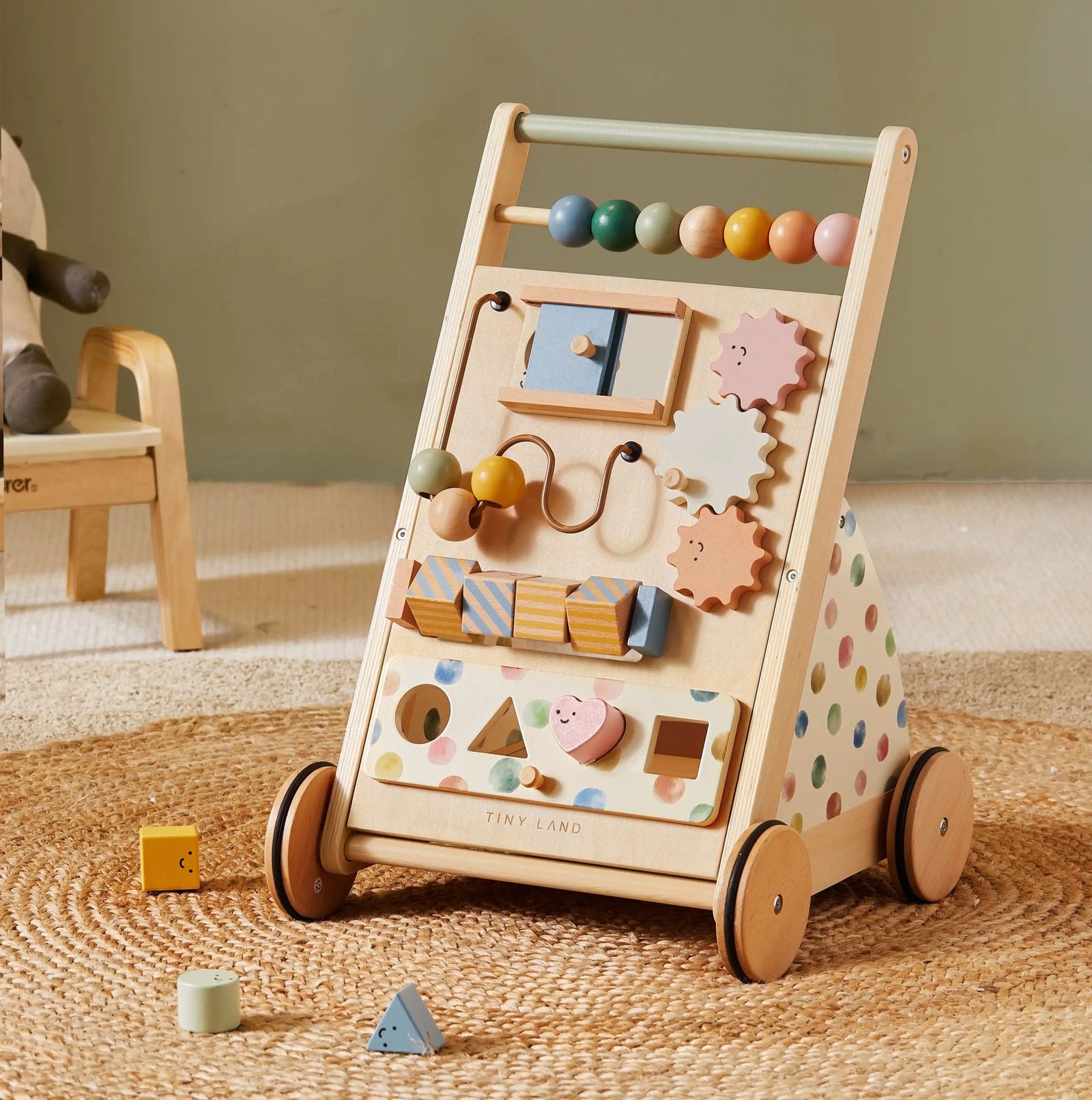
Supporting a child’s first steps is an important milestone for every family. Parents today look for tools that promote safety, encourage independence, and contribute to healthy development. A Wooden Baby Walker offers a practical solution that aligns with these goals.
Its thoughtful design combines stability, durability, and interactive learning features, making it a valuable addition to early childhood essentials.
Supports Natural Physical Development
Encourages Upright Movement
Toddlers learn to walk through repeated practice and balance adjustments. A wooden push walker allows children to stand upright while moving forward at their own pace.
This natural movement pattern strengthens posture and reinforces proper body alignment.
Builds Muscle Strength Gradually
Pushing the walker activates core, leg, and arm muscles. Continuous engagement supports healthy muscle development without forcing movement.
Gradual strengthening prepares toddlers for independent walking with greater stability.
Provides Stability and Safe Support
Solid Construction for Balance
The weight and frame design of wood contribute to improved stability. A sturdy base reduces the likelihood of tipping during active play.
Stable support gives toddlers confidence as they explore new movement patterns.
Controlled Speed for Safer Practice
Many wooden baby walkers include wheels designed with resistance or controlled rotation. This feature helps manage speed and prevents sudden acceleration.
Controlled movement creates a safer environment for learning.
Encourages Independence and Exploration
Freedom to Move
Modern parenting values tools that promote self-discovery. A wooden baby walker allows toddlers to explore their surroundings independently while still receiving support.
This balance between freedom and guidance builds confidence.
Strengthens Decision-Making Skills
As children decide where to push and how to navigate space, they develop early problem-solving abilities.
Movement-based exploration enhances awareness of distance, direction, and obstacles.
Enhances Cognitive Growth Through Interactive Play
Built-In Learning Elements
Many models include activity features such as:
-
Bead mazes
-
Rotating gears
-
Shape sorters
-
Colorful patterns
These interactive components stimulate curiosity while improving fine motor control.
Improving Hand-Eye Coordination
Manipulating small objects and moving parts strengthens coordination between vision and hand movement.
These skills support future tasks such as drawing, writing, and self-feeding.
Durable Investment for Growing Families
Long-Lasting Material Quality
Wood offers natural durability that withstands daily use. Strong joints and quality craftsmanship extend product lifespan.
A durable walker can support multiple developmental stages.
Versatile Use Over Time
Even after walking skills develop, the walker remains useful as:
-
A toy storage unit
-
A pretend play accessory
-
A decorative children’s piece
Its adaptability increases long-term practicality.
Eco-Friendly and Safe Material Choice
Sustainable Production
Wood is a renewable resource when responsibly sourced. Choosing wooden products reduces reliance on synthetic materials.
Sustainable construction benefits both families and the environment.
Non-Toxic Finishes
Reputable manufacturers use safe paints and coatings that reduce exposure to harmful chemicals.
Safe materials ensure toddlers interact with products designed with health considerations in mind.
Practical Tips for Parents
To maximize benefits and ensure safe use:
-
Supervise every play session
-
Use on smooth, flat surfaces
-
Keep away from stairs and sharp edges
-
Adjust wheel resistance if available
Consistent monitoring enhances safety while supporting growth.
Conclusion
A Wooden Baby Walker stands out as a must-have tool for modern parents who value safety, durability, and developmental support. Its stable design encourages natural movement, strengthens muscles, and builds confidence during the early walking stage.
Beyond mobility assistance, it promotes interactive learning and long-term usability. For families seeking a balanced approach to early childhood development, this tool offers meaningful value.

 Turkish