


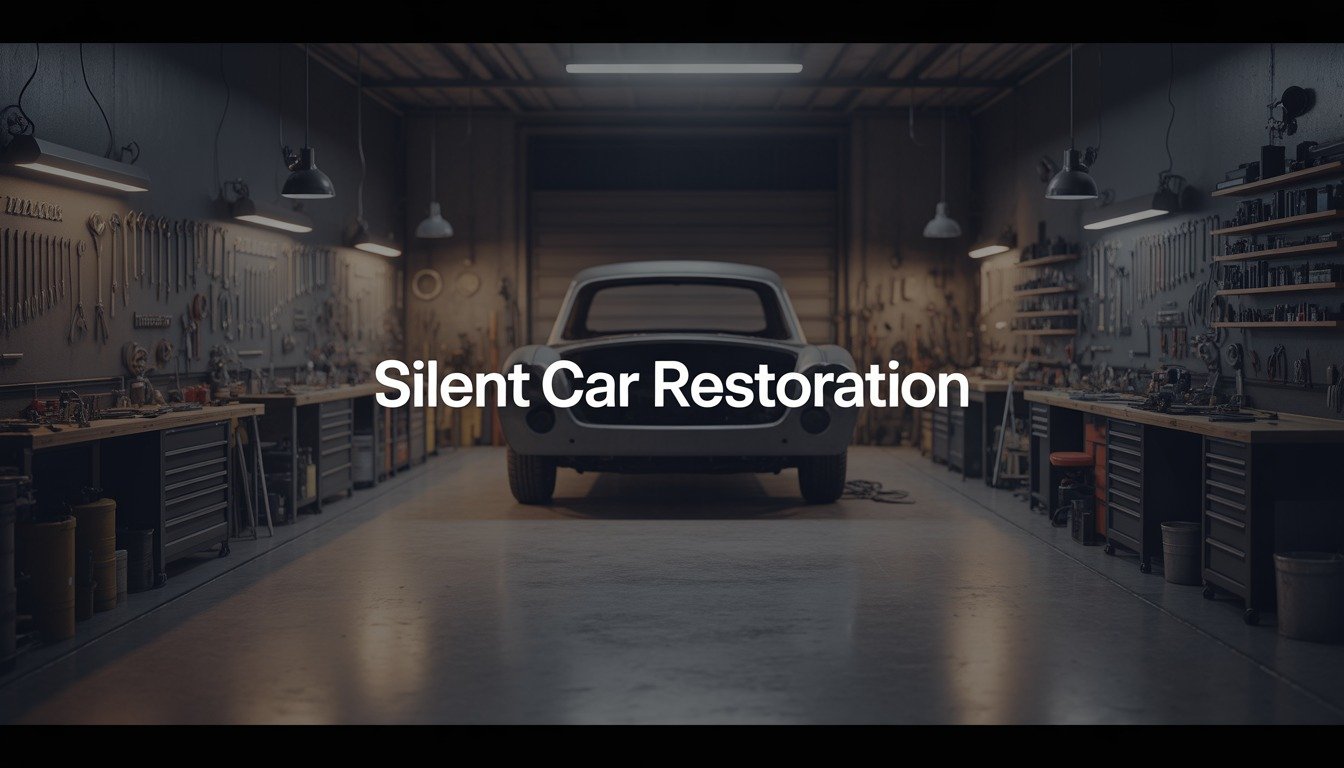
Old cars don’t die.
They sit. They rust. They wait.
Some end up in scrap yards. Some stay in garages for years. Dust builds up. Paint fades. Metal weakens. Most people walk past them without a second look.
But for the right person, that rusted shell is not junk. It’s a project.
That’s what Silent Car Restoration is about. Taking a car that looks finished and slowly bringing it back to life. No loud talk. No drama. Just steady work.
This is not about flipping cars fast. It’s about rebuilding them properly.
What Silent Car Restoration Really Means
At its core, Silent Car Restoration is simple.
You start with a damaged or neglected car.
You take it apart.
You repair or replace what’s broken.
You rebuild it piece by piece.
You make it run again.
You make it look right again.
That’s it.
But in practice, it takes patience. Skill. Time. And a lot of small decisions.
Every bolt matters. Every weld matters. Every layer of paint matters.
Why Old Cars Deserve a Second Chance
A modern car is built for convenience. A classic car was built with character.
Older cars have:
- Solid metal bodies
- Simple mechanical systems
- Unique shapes
- Strong road presence
They were built in a different time. You can see it in the design.
When you restore one, you’re not just fixing metal. You’re preserving a piece of history.
Silent Car Restoration focuses on that idea. The goal is not just to make the car run. The goal is to respect the original build.
Step 1: Inspection and Planning
Every project starts the same way.
You look at the car closely.
- How bad is the rust?
- Is the frame straight?
- Is the engine complete?
- Are parts missing?
- Has it been modified badly before?
This stage is important. You don’t rush it.
With Silent Car Restoration, the first step is always understanding the damage before touching anything. If you skip this part, you create more problems later.
Planning saves time.
Step 2: Full Disassembly
Once the plan is clear, the car comes apart.
Seats out.
Interior removed.
Glass out.
Engine removed.
Suspension taken apart.
You label parts. You store bolts properly. You take photos.
A proper Silent Car Restoration project treats disassembly like surgery. Clean. Organized. Careful.
If you rush this stage, reassembly becomes a mess.
Step 3: Rust Repair and Metal Work
This is where most restorations either succeed or fail.
Rust spreads quietly. What looks small on the surface can be worse underneath.
Common rust areas:
- Floor pans
- Rocker panels
- Wheel arches
- Trunk floor
- Frame rails
Bad metal must be cut out. Not covered. Not filled.
New metal must be welded in cleanly. Straight lines. Solid welds. No shortcuts.
Silent Car Restoration projects focus heavily on proper metal repair. That’s what makes the final result solid.
You can’t build a clean car on weak metal.
Step 4: Engine and Mechanical Rebuild
A car can look perfect. But if it doesn’t run right, the job isn’t finished.
Mechanical work often includes:
- Engine rebuild
- Carburetor or fuel system repair
- New gaskets and seals
- Brake system overhaul
- Suspension rebuild
- Electrical rewiring
Older cars are mechanical. Simple. But they still require precision.
Clearances matter. Timing matters. Torque specs matter.
Silent Car Restoration doesn’t skip these details. The engine should not just start. It should run smoothly.
Step 5: Body Preparation and Paint
Paint gets attention. But prep work matters more.
Before paint:
- Sanding
- Filler work
- Primer
- Block sanding again
- Panel alignment
Most of the work happens before color is sprayed.
If prep is bad, paint shows every mistake.
Silent Car Restoration projects often highlight this stage. It’s slow. It’s repetitive. But it’s necessary.
When the final coat goes on, it should sit flat and clean. No waves. No heavy texture.
That’s the difference between a quick job and a proper restoration.
Step 6: Interior Restoration
The outside gets attention. The inside matters just as much.
Common interior work:
- New seat upholstery
- Foam replacement
- Carpet installation
- Dashboard repair
- Gauge restoration
- Door panel rebuild
Interior work changes how the car feels.
You sit inside. You touch the steering wheel. You look at the dash.
Silent Car Restoration projects aim to keep the original look when possible. Not everything needs to be modernized.
Sometimes keeping it stock is the best choice.
Step 7: Reassembly
This is the most satisfying stage.
Fresh paint. Restored parts. Clean hardware.
You slowly rebuild the car.
Glass goes back in.
Trim gets installed.
Engine drops into place.
Wheels go on.
Everything should fit correctly. No forcing parts. No cutting corners.
Silent Car Restoration shows that patience during reassembly makes a huge difference.
Why Silent Car Restoration Content Feels Different
A lot of car content online is loud. Fast edits. Big reactions.
But many people prefer something else.
They like watching real work.
Silent Car Restoration focuses on process. Not hype. Not noise.
You see:
- Tools in use
- Real welding
- Real sanding
- Real mechanical repair
That makes it easier to learn from.
It also makes it relaxing to watch.
What You Can Learn From Watching Restoration Work
Even if you don’t restore a car yourself, you can learn a lot.
You start understanding:
- How car frames are built
- How engines are assembled
- Why rust spreads
- How paint layers work
- Why preparation matters
It builds mechanical awareness.
If you plan to restore your own car one day, watching Silent Car Restoration gives you realistic expectations. You see how long things actually take.
No shortcuts. No magic.
Just work.
The Reality of Time and Cost
Restoration is not cheap. It is not quick.
Parts cost money.
Tools cost money.
Paint costs money.
Time costs the most.
Many projects take months. Some take years.
Silent Car Restoration shows that progress can be slow. And that’s normal.
If someone tells you a full classic rebuild is easy, they’re not being honest.
Common Mistakes in Car Restoration
People often make the same mistakes:
- Starting without a plan
- Underestimating rust damage
- Losing or mixing hardware
- Skipping proper metal repair
- Rushing paint preparation
- Ignoring wiring issues
A careful approach avoids these problems.
Silent Car Restoration highlights patience. That’s what prevents mistakes.
Is Car Restoration Worth It?
For some people, no.
It takes time. It takes space. It takes effort.
But for others, it’s worth everything.
You take something that was nearly scrap. You rebuild it. You drive it again.
That feeling is hard to explain.
Silent Car Restoration captures that process clearly. Not with big speeches. Just with results.
Who Is Silent Car Restoration For?
It’s for:
- Classic car fans
- Mechanics
- DIY builders
- Engineering students
- People who enjoy detailed work
- Anyone who likes before-and-after transformations
You don’t need to be an expert.
You just need interest.
FAQs
What is Silent Car Restoration?
Silent Car Restoration focuses on rebuilding old and damaged cars step by step. The goal is to restore them properly, not quickly.
Are the restorations full rebuilds?
Most projects involve deep work. Metal repair, engine rebuild, paint, and interior work. It’s not just surface fixes.
Can beginners learn from watching?
Yes. Watching the process helps you understand tools, structure, and repair methods. It gives realistic insight into restoration work.
Is restoring a car expensive?
It can be. Costs depend on the condition of the car and how much work is needed. Rust repair and paint are usually the biggest expenses.
How long does a full restoration take?
It depends on the project. Some take months. Others take years. It’s not a fast process.
Final Thoughts
Silent Car Restoration is simple in concept.
Take a worn-out car.
Break it down.
Fix it properly.
Build it back up.
No shortcuts.
Watching a rusted car turn into a clean, running machine never gets old. It’s not about speed. It’s about care.
That’s what makes the difference between a patched-up vehicle and a true showpiece.

 Turkish